BLOG
Buffalo Hunts: What a Real Guided Hunt Looks Like in 2026
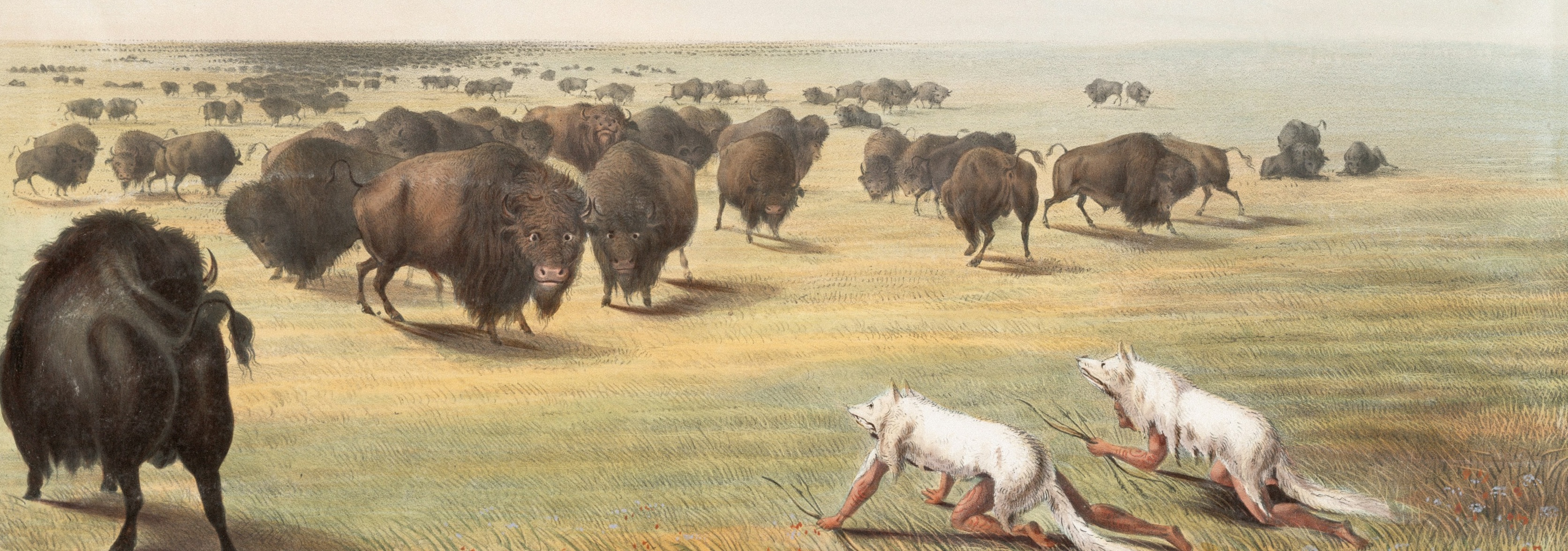
Buffalo Hunts: What a Real Guided Hunt Looks Like in 2026
A buffalo hunt is not a deer hunt with a bigger animal. It's a different kind of trip entirely — closer to walking into a piece of American history than checking a tag.
We run guided buffalo hunts on our working bison ranch in the Nebraska Sandhills. Real herd. Real country. Fair chase across deeded ground that looks almost exactly like it did when 30 million buffalo covered this part of the continent. No high fences across canyon-sized pastures. No paddock walks. No "trophy" animals delivered to a feeder.
This is the guide we wish existed when we started looking for our own buffalo hunt. Where to hunt one. What it actually costs. What "guided" should mean. What you take home when it's over.
What a Buffalo Hunt Actually Is
You don't hunt buffalo the way you hunt whitetail. They don't spook the same way. They don't run the same way. And when they fall, the work that follows is bigger than anything most hunters have done before.
Here's the honest version:
- The animal is huge. A mature bison bull weighs 1,800 to 2,200 pounds. A cow runs 900 to 1,100. The hide alone weighs 60 to 80 pounds wet.
- The shot matters more than the stalk. Bison are tough. A poor shot ends with a long blood trail across open country. We coach the shot before the trigger pull.
- The recovery is the work. Field-dressing a bison is a half-day project with three or four people, a tractor, and a winch. We handle that. You watch, learn, and help if you want.
- You leave with hundreds of pounds of meat. A typical bison cow yields 400 to 500 pounds of clean, packaged meat. A bull yields 600 to 800. Every cut comes home with you, butchered and frozen, ready for the deep freezer.
That last part is what separates a real buffalo hunt from a trophy operation. We're not in the head-on-the-wall business. We're in the meat-in-the-freezer, hide-on-the-ranch-house-floor, story-you-tell-for-thirty-years business.
Where to Hunt Buffalo in the United States
Wild buffalo hunts on public land are nearly nonexistent. Yellowstone tags exist but are extremely limited and politically fraught. The realistic options for a hunter today are private ranches that manage their own herds.
A few things to look for when you're choosing where to hunt:
| Look for | Avoid |
|---|---|
| Free-range pastures of 500+ acres | Small paddocks (under 100 acres) |
| Working ranches that breed and manage a real herd | High-fence operations that buy and stock animals |
| All-inclusive pricing with the hide and meat included | À la carte trophy fees and butcher upcharges |
| Lodging on the ranch | Drive-in, drive-out hunts |
| Guides who actually run the cattle | Outfitters who outsource the work |
ReWild Ranch is a working bison ranch in Sargent, Nebraska. We breed our own herd. We pull our own calves. We rotate the pastures, manage the grass, and run the operation year-round. The hunt is one part of the ranch — not the whole reason it exists. That changes what the hunt feels like.
What "Guided" Should Mean
The word "guided" gets used loosely. On a real guided buffalo hunt, here's what should be included:
- A pre-hunt rifle check. We confirm zero on the range before you walk into the pasture. Nobody hunts a 2,000-pound animal with a rifle that's off at 100 yards.
- A shot-placement briefing. Bison anatomy is different from deer. The vitals sit lower and farther forward than most hunters expect. We walk through a diagram and a real animal's outline before you take the field.
- A guide who has done this hundreds of times. Not a college kid earning summer money. Someone who's been on every hunt this ranch has run.
- Recovery, field-dressing, and quartering. All included. Tractor, winch, knives, ice — the whole operation.
- Butchering and packaging. Your meat is processed at a USDA facility, vacuum-sealed, frozen, and either picked up at the ranch or shipped to your door.
- The hide and skull, prepared. We work with a regional taxidermist if you want a full mount, or just the hide and skull if that's enough.
- Lodging and meals. A 2-day, 3-night stay in our 9-room lodge with home-cooked meals. You hunt, you eat well, you sleep in a real bed.
If a quote doesn't include all of that, it's not really an all-inclusive hunt. It's a permit to shoot an animal.
What a Hunt Day Looks Like
Most of our buffalo hunts run as 2-day, 3-night trips. Here's the rhythm:
Day 1 — Arrive. Roll in by mid-afternoon. Drop your bags in the lodge. Sight in your rifle on our 100-yard range. Walk the pastures with your guide and look at the herd. Eat dinner — usually something off the ranch, often something we shot or grew. Drink whiskey on the porch if that's your thing. Sleep.
Day 2 — Hunt. Coffee at first light. Out into the pasture by sunrise on a UTV or on foot, depending on where the herd is. The stalk is the slowest part of the day — bison move with the wind and you have to read it. When the shot presents, you take it. The recovery starts immediately. By mid-afternoon the animal is hanging in our cooler. Dinner is yours. Most hunters sit on the porch and don't say much. There isn't a lot to say.
Day 3 — Pack out. Coffee. Breakfast. Final paperwork. Pickup of any meat that's been quick-frozen, or coordination with the butcher for shipping. Handshake. Drive home.
Pricing: What a Real Buffalo Hunt Costs
Our 2-day, 3-night all-inclusive guided buffalo hunts are $6,200, all-inclusive. That includes:
- Two nights of lodging in our 9-room lodge
- All home-cooked meals on the ranch
- The hunt itself, fully guided
- Recovery, field dressing, quartering
- USDA-inspected butchering and packaging
- The hide and skull, prepared
- A non-hunting companion at no extra cost
What it doesn't include: travel to and from the ranch, your hunting license, taxidermy mounts beyond the hide and skull, and the optional add-ons (UTV tours, skeet, stargazing, the rest of the ranch).
Cheaper buffalo hunts exist. They're either smaller animals, smaller pastures, or hunts where the work after the trigger pull becomes your problem. We've talked to enough hunters who tried the cheap version to know the math doesn't work in your favor.
For the full pricing breakdown — including how a hunt at ReWild compares to other private bison operations — see Private Bison Hunts in Nebraska: Cost, Experience, and What Makes It Different.
Buffalo or Bison: Which Do You Hunt?
Both. They're the same animal.
"Buffalo" is the older American word. "Bison" is the scientific name (Bison bison). Cape buffalo and water buffalo are different animals on different continents. When an American hunter talks about a buffalo hunt, they mean the North American bison.
We use both words. Most of our hunters call them buffalo. The biologists call them bison. The animal doesn't care.
For the longer story on the language, the science, and why "buffalo" stuck: Buffalo vs. Bison: What's the Difference?
Where ReWild Ranch Sits
We're at 81785 Road 457, Sargent, Nebraska 68874 — middle of the Sandhills, two and a half hours north of Lincoln, three and a half from Omaha, six and a half west of Chicago. Closest commercial airports are Kearney (KEAR), Grand Island (GRI), and Omaha (OMA). Most of our hunters drive in. A few fly into Grand Island and rent a vehicle for the last 90 minutes.
The ranch has been here a long time. The herd has been here longer. The country itself has been here longest of all.
Book a Hunt
Open dates fill first-come, first-served. Bison hunts run year-round, but September through January are the most-requested months.
Call Danielle at (308) 730-4116 to check open dates, or email danielle@rewildranch.com.
You've earned this. Hunt, stay, eat, explore, or just sit on the porch with a whiskey. Whatever you're here for, we've got you.
Frequently Asked Questions
How much does a guided buffalo hunt cost?
A real all-inclusive guided buffalo hunt is $6,200 for a 2-day, 3-night trip including the hunt, lodging, meals, butchering, the hide, and the skull. Cheaper hunts usually cut something — the lodging, the butchering, the hide preparation, or the size of the pasture. ReWild Ranch's bison hunts include all of it. The full breakdown is in our private bison hunt pricing guide.
What's the difference between a buffalo hunt and a bison hunt?
There isn't one. "Buffalo" is the older American word for the North American bison. They're the same animal. Hunters use both terms interchangeably. We do too. The full language history is in Buffalo vs. Bison: What's the Difference?.
How much meat do you take home from a buffalo hunt?
A bison cow yields roughly 400 to 500 pounds of clean, packaged meat. A bull yields 600 to 800 pounds. At ReWild Ranch, USDA-inspected butchering is included — the meat is vacuum-sealed and frozen, ready to take home or ship.
Where can you hunt buffalo in the United States?
Wild public-land buffalo hunts are extremely rare and lottery-based. The realistic option for most hunters is a private ranch that manages its own herd. Look for ranches with free-range pastures of 500+ acres, working herds, and all-inclusive pricing. ReWild Ranch is one of the few working bison ranches in the country that runs guided hunts on its own deeded ground in the Nebraska Sandhills.
Do you provide rifles for the hunt?
Most hunters bring their own. We recommend .300 Win Mag, .338 Lapua, or larger for clean, ethical shots on a 1,800-2,200-pound animal. We can arrange rentals on request. Rifle is sighted in on our range before the hunt.
Is a guided buffalo hunt fair chase?
At ReWild Ranch, yes. Our pastures run hundreds of acres of open Sandhills country with real terrain, real wind, and real stalking. The herd is free-ranging within that ground. We don't run high-fence operations or stocked animals. Read more about how we run hunts in our complete guide to bison hunting in Nebraska.
check out other posts
Nebraska Sandhills Lodge: Where to Stay When You're Not Hunting
Thermal and Night Vision Coyote Hunting in the Nebraska Sandhills
