BLOG
Aoudad Hunting in Nebraska: Why Hunters Are Skipping Texas
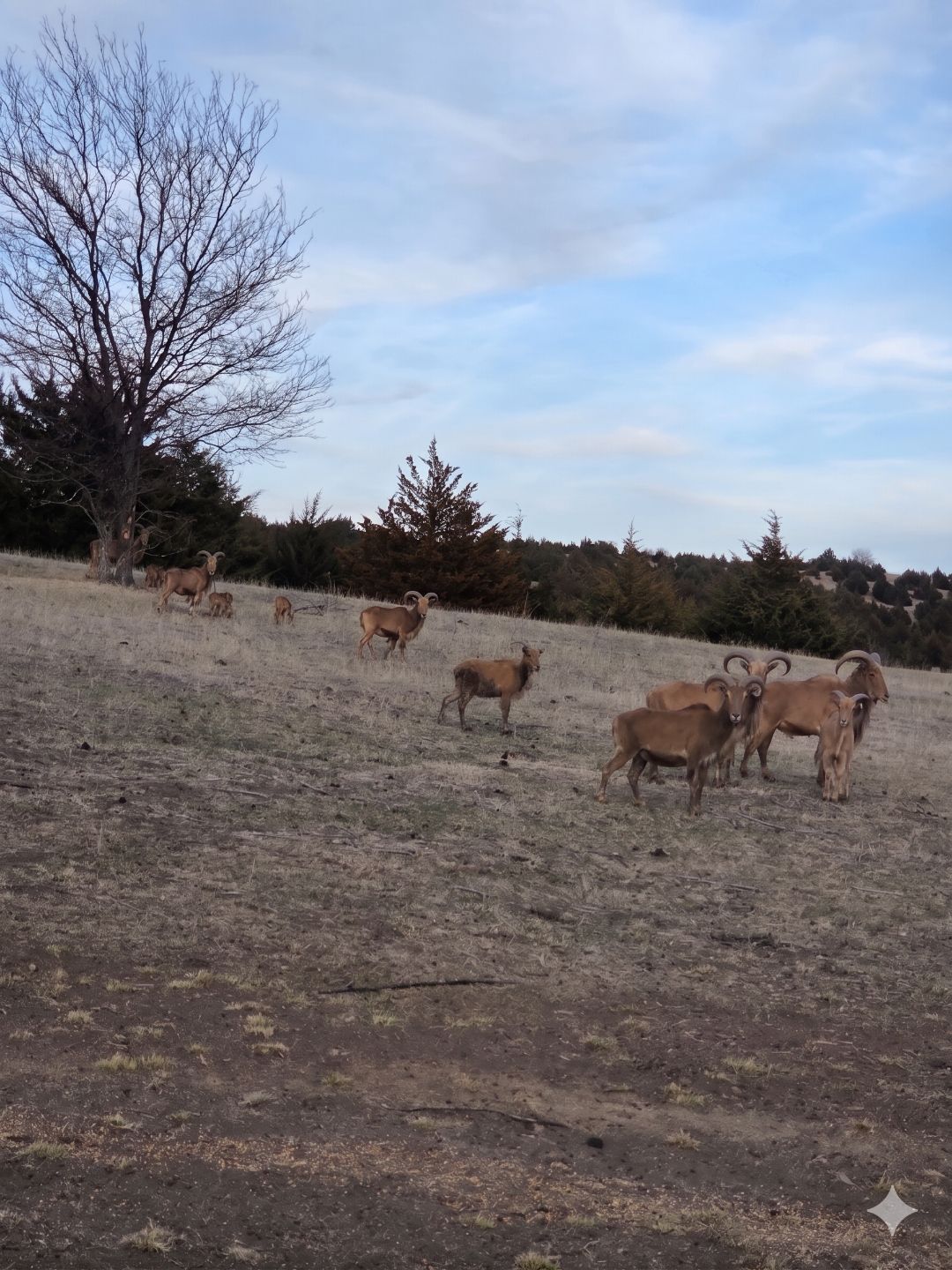
Almost every aoudad hunt in America takes place in West Texas — canyon country at 5,000+ feet, sharp rocks, thin air, and a four-hour drive from the nearest airport. That's still a great hunt. But it's not the only option anymore, and for a growing number of hunters, it's not the best one.
ReWild Ranch in Sargent, Nebraska offers fully guided aoudad hunts in the Nebraska Sandhills. We're the only ranch in the state marketing this hunt. The keyword "aoudad hunting Nebraska" returns almost no results. We're not surprised — this is genuinely new territory, and we think it's worth explaining why we're doing it and what you can expect.
This page covers everything: the animal, the terrain, the tactics, the gear, the meat, and what makes a Nebraska aoudad hunt different from what you'll find in Texas.
Table of Contents
- What Is Aoudad Hunting?
- Nebraska vs Texas Aoudad Hunting — The Real Difference
- What to Expect on a Guided Aoudad Hunt at ReWild Ranch
- Terrain and Tactics in the Nebraska Sandhills
- Gear and Caliber Recommendations
- Processing Your Aoudad
- Conservation and Herd Management
- What's Included in the Hunt Package
- Frequently Asked Questions
- Book Your Aoudad Hunt at ReWild Ranch
What Is Aoudad Hunting?
Aoudad (Ammotragus lervia), also called Barbary sheep, are native to the rocky desert mountains of North Africa — Algeria, Libya, Morocco, Chad, and neighboring countries. Despite the name, they're not true sheep. Taxonomically, they sit in the caprine subfamily, more closely related to wild goats than to the sheep you'd see on a farm. The name "Barbary sheep" comes from the Barbary Coast of North Africa, where the species was first documented by Western naturalists. Hunters call them aoudad (pronounced OW-dad), a word adapted from the Berber language of the indigenous Amazigh people of North Africa.
How Aoudad Got to Texas
In 1957 and 1958, Texas Parks and Wildlife released aoudad into the wild in Palo Duro Canyon — the same canyon system that hosts the state's famous whitetail and mule deer populations. The idea was to create a legal hunting target in rough West Texas terrain where deer densities were low. Private ranches had already been importing aoudad as hunting stock since the late 1940s.
It worked better than anyone anticipated. The Trans-Pecos proved ideal habitat: rocky slopes, sparse vegetation, dramatic elevation changes, abundant hiding terrain. Aoudad adapted immediately and bred fast. By 1963, initial surveys estimated a modest population. By 2025, TPWD data places the free-roaming aoudad count at roughly 100,000 animals west of the Pecos River alone — an increase of approximately 1,800% since those early surveys.
The Animal Itself
Male aoudad (rams) weigh 225–300 pounds, stand 40–45 inches at the shoulder, and carry heavy, curved horns that average around 29 inches in mature animals. Trophy rams push 30–34 inches; exceptional individuals reach 35 inches or more. Both sexes have horns, but the females' are substantially smaller. The most recognizable feature is the long fringe of hair — called a mane or "chaps" — that hangs from the throat, chest, and forelegs. On a big ram, this fringe can brush the ground. The overall coloration is sandy brown, darkening with age.
What makes them hard to hunt isn't their size. It's their senses and their athleticism. Aoudad have exceptional eyesight. They can detect movement at extreme distances and they use terrain the way few other game animals do — positioning themselves on high ground with sightlines in every direction. When pressured, they don't panic and run blind. They pick their path and move deliberately, often gaining ground faster than you'd expect. A mature ram can jump seven feet vertically from a standing start. They're not waterhole-dependent; they pull moisture metabolically from the plants they eat.
The trophy side of things is recognized by the Safari Club International (SCI) under Method 11, which adds up both horn lengths plus base circumference and three mass measurements. A score of 141 1/8 inches qualifies for SCI Gold Medal. Boone & Crockett doesn't record aoudad, since they're non-native to North America.
The History of Barbary Sheep in America
Nebraska vs Texas Aoudad Hunting — The Real Difference
If you've researched aoudad hunts, you've been looking at Texas. That's where virtually every outfitter is. Specifically, you've probably been looking at West Texas — the Trans-Pecos region, places like Van Horn, Alpine, Fort Davis, and the area around Big Bend. Here's what that hunt involves:
You fly into El Paso or Midland, rent a vehicle, and drive two to four hours to a ranch. The terrain is high desert mountain country: rocky canyons, shale slopes, sparse scrub. Elevation runs 3,500–6,500 feet above sea level. You'll hike steep terrain in thin air, often covering significant vertical ground between the truck and your glassing point. The shots, when they come, are typically 200–400 yards across canyon country. It's a physically demanding hunt. Texas outfitters are honest about this — most recommend six months of preparation hikes with a weighted pack.
That's a real and rewarding hunt. We're not dismissing it.
But it's not for everyone.
The Nebraska Alternative
The Nebraska Sandhills operate at roughly 2,000–2,500 feet elevation. The terrain is rolling grass-stabilized sand dunes, cedar draws, and open prairie — not canyon walls and shale. The ground is soft underfoot. There's no altitude to acclimate to. Hunters from Iowa, Minnesota, Illinois, Missouri, or any flat-state background don't arrive here at a physical disadvantage the way they might at 5,500 feet in the Chinati Mountains.
We call it a mountain-style hunt without the altitude. That's accurate. You're still hunting a wild, free-roaming animal that lives on its instincts, uses terrain to its advantage, and requires real effort to find and stalk. The challenge is genuine. But the access point — the physical starting line — is dramatically different.
This matters for three groups of hunters:
Older hunters. Plenty of men in their 60s and 70s who hunted hard their whole lives are looking for a hunt that doesn't require altitude acclimation and extreme vertical terrain. The Sandhills offer that without sacrificing the trophy or the experience.
Hunters from flat states. A deer hunter from central Illinois who hunts at 700 feet elevation all his life will feel the difference at 5,500 feet in West Texas within the first two hours. That's not an excuse — it's physiology. Nebraska removes that variable.
Hunters who want to drive. West Texas requires flying and a rental vehicle, minimum. ReWild Ranch is in Sargent, Nebraska — a drive-in destination for hunters from the Midwest. Pull off the highway and you're here.
The Texas Controversy
There's another reason to consider Nebraska that has nothing to do with terrain.
In June 2025, Texas lawmakers legalized shooting aoudad from helicopters — added them to the extremely short list of animals that can be taken aerially. This followed years of escalating alarm from wildlife managers and conservation organizations about what 100,000 aoudad west of the Pecos are doing to the desert bighorn sheep recovery program.
The numbers are stark. Texas desert bighorn peaked at roughly 1,800 animals after decades of expensive reintroduction work. The current count is approximately 400 — down 78% from that peak. Aoudad carry pneumonia bacteria that they survive but bighorn do not. Two documented disease events wiped out half the bighorn herds in the Van Horns and Black Gap Wildlife Management Area. On top of that, aoudad outcompete bighorn for water, forage, and terrain.
Big Bend National Park announced aerial removal operations for aoudad in October 2025. The Wild Sheep Foundation has formally prohibited the promotion of aoudad hunting in their award programs, publications, and conventions.
Hunting aoudad at ReWild Ranch carries none of this baggage. Our animals are privately managed on private land in Nebraska. There are no native bighorn in the Sandhills. There is no invasive species controversy. You're hunting a challenging, impressive animal on a well-managed ranch, and you're going home with a clean conscience about the conservation picture.
Nebraska vs Texas Aoudad Hunting: A Full Comparison
What to Expect on a Guided Aoudad Hunt at ReWild Ranch
We run 3–4 day hunts. Here's how a typical hunt unfolds.
Day One: Arrival and Orientation
Most hunters arrive in the afternoon. You'll get a full walkthrough of the lodge — 8,500 square feet, full B&B setup, private rooms, common areas. Your guide will sit down with you that evening, go over the ranch layout, look at your rifle, and have a conversation about what you shoot well at and what your physical comfort level is. We want to know if you're a 300-yard shooter or if 150 yards is your confident range. That shapes how we approach the stalk.
We'll discuss the animals we have on the ranch, what we've been seeing, and where the rams have been running. Dinner that first night uses ranch-raised bison — usually something simple and filling, because you're getting up early.
Day Two and Three: The Hunting
We're out before first light. Aoudad are most active at dawn and dusk — they'll feed in low-light, then retreat to high ground or shade through midday. We use that behavior to our advantage.
The primary method is spot-and-stalk. We'll use a side-by-side to get to elevated glassing positions, then glass with binoculars and spotting scope. When we locate a shootable ram — the right horn length, the right body size — we figure out a stalk. Wind direction is everything. Aoudad's noses are very good, and they've got eyes on everything downwind. We'll use draws, ridgelines, and whatever terrain we can put between us and them.
When the stalk is ready, it's your shot to make. We don't push hunters to take marginal shots. If the wind shifts and blows the stalk, we reset. This is a hunt, not a guarantee — but our success rates on guided aoudad hunts run 80–95%.
For hunters who need a different approach, we can also hunt from blinds. This is a legitimate option for someone with knee issues, hip replacement recovery, or any other mobility consideration. The hunt is still real and the animal is still challenging; the setup just changes.
Midday we're back at the lodge. That's when hunters catch their breath, check gear, eat lunch, and rest. It's also when we re-analyze what we saw in the morning and talk through the afternoon plan.
Day Four: Final Morning and Departure
Most hunts wrap up in the first three days. We keep Day Four available as a buffer — if we had wind issues or missed a stalk, that morning gives us another shot before you need to drive home.
What to Expect on Your First Aoudad Hunt
Terrain and Tactics in the Nebraska Sandhills
The Nebraska Sandhills is the largest grass-stabilized sand dune system in the Western Hemisphere — roughly 20,000 square miles of rolling dunes covered with native prairie grasses, interspersed with wetlands, meadows, and cedar draws. The Ogallala Aquifer sits beneath it, feeding thousands of small lakes and wet meadows across the region. This is not the image most people associate with aoudad hunting.
Traditional aoudad country in West Texas is defined by vertical terrain. You're hunting sheep on slopes. The animal uses cliff faces, rocky outcroppings, and sheer canyon walls as their defensive perimeter. Hunting them there is a vertical game.
The Sandhills shift that dynamic. Instead of cliff faces, you have ridgelines and draws. The dunes themselves reach up to 400 feet in height, which is significant — you still get genuine elevation changes, genuine glassing positions, and genuine stalks. But you're not navigating shale or scrambling over boulders. The ground is soft. The approaches through draws are grassed over and quiet underfoot, which is actually an advantage — you can move more quietly on grass than on rock.
How We Hunt the Sandhills
We glass from ridgeline crests. With good optics, you can cover a lot of ground from a high point in the Sandhills — the open nature of the landscape means long sightlines once you're elevated. Spotting scope on a tripod, glassing systematically across the terrain, looking for the ear flick or horn curve that gives an animal away.
When we find a ram, we study him before we move. How is he positioned? Which way is the wind running? What draws or low ground can we use to approach? A Sandhills draw — a low, grassed channel between dunes — is the equivalent of the canyon approach in Texas. It's your cover, your pathway, your wind break.
Shots on our ranch typically run 150–400 yards depending on terrain and how close the stalk allows. We don't push hunters to attempt shots they're not comfortable with. Know your rifle, know your effective range, and be honest with your guide about both.
Physical demands are real but not extreme. You'll walk. You'll climb. You'll crouch and move slowly. On a typical hunting day, you might cover three to five miles of terrain, with significant elevation changes on the dune faces. This is not a sit-in-a-blind-all-day experience — it's an active, moving hunt. But it's not the lung-burning, knee-grinding workout of hunting at 6,000 feet in the Trans-Pecos.
The Complete Aoudad Hunting Gear List
Gear and Caliber Recommendations
Rifle and Caliber
Aoudad are tough animals with a strong will to live. This is consistent across every source we've consulted and every guide who has hunted them. A poorly placed shot on a marginal caliber will result in a tracking job — or a lost animal. Shot placement is more important than caliber, but caliber matters on aoudad more than it does on deer.
Our minimum recommendation is 7mm — that covers 7mm-08, 7mm Remington Magnum, or similar. Our preferred calibers for Sandhills conditions are .300 Winchester Magnum and .300 PRC. Both handle the 300–500 yard shots you might face, drive heavy bullets with authority, and retain energy well at those distances.
If you're bringing a 6.5 Creedmoor, you can make it work at shorter ranges with premium bullets, but you'll be at the edge of what we consider appropriate for these animals. The .30-06 is a fine choice for hunters who know it well. A .338 works but is overkill for most shots.
Whatever caliber you're running, use a premium bonded or partition-style bullet. Nosler Partitions, Barnes TTSX, Federal Trophy Bonded Bear Claw, Hornady ELD-X — these are designed to hold together at high velocity and penetrate through heavy muscle and bone. An aoudad won't fall over from a chest hit the way a whitetail does. Put the bullet where it should go and use a bullet that will do the work.
Shoot your rifle before you come. We see hunters at the range who haven't touched their rifles in two years. Your zero matters, your trigger pull matters, and your familiarity with the rifle under field conditions matters. Know your drop at 300 yards. Practice from field positions — kneeling, sitting, shooting sticks — not just the bench.
Optics
Good glass is non-negotiable on this hunt. You'll be glassing terrain for long periods, trying to pick out an animal that is extremely well-camouflaged in brown and tan grass.
- Binoculars: 10x42 minimum. 12x50 is better. Quality matters here — cheap glass on a bright morning creates eye fatigue within an hour.
- Spotting scope: Bring one, or we'll have one available. 20–60x variable on a solid tripod. You cannot consistently identify horn length at 400+ yards with binoculars alone.
- Rifle scope: 3–18x or similar variable. Clear glass, reliable zero at field conditions.
Boots and Clothing
Nebraska Sandhills weather is genuinely variable. October hunting can mean 70°F afternoons and 28°F mornings. November through February can bring anything from mild days to ground blizzards. Layer accordingly.
- Boots: Waterproof, well broken-in, ankle support. The terrain isn't rocky like West Texas, but you'll be crossing wet meadows and dew-covered grass in the early morning. Wet feet on a two-hour stalk are miserable. Spend money on boots.
- Base layer: Merino wool or quality synthetic moisture-wicking. You'll be sweating on the stalk and sitting cold when you stop.
- Mid layer: Fleece or insulated jacket, packable. Something you can stuff in your daypack when you're moving.
- Outer layer: Windproof shell. The Sandhills wind is a consistent feature of every hunt. It is not a gentle breeze.
- Orange: Wear blaze orange as required by Nebraska regulation.
The ranch provides transportation between glassing points and hunting areas. You don't need to carry everything you own on your back — just what you need for the stalk.
Best Calibers for Aoudad Hunting: A Practical Guide
Processing Your Aoudad
After the Shot
When your ram is down, the work begins. Field dressing needs to happen promptly. Aoudad have a musk gland — proper field care means not contaminating the meat during the process. Our guides have handled this many times and will walk you through it or handle the initial steps while you're still catching your breath.
The cape — the head, neck, and shoulder skin — is carefully removed if you plan to have a shoulder or full-body mount done. This is something our guides do with care. A ripped cape means a headache for your taxidermist and money out of your pocket. We don't rush this step.
Meat is field dressed and cooled as quickly as possible. Temperature matters enormously with aoudad. An animal left warm for two hours develops the gamey reputation the species doesn't deserve. Cooled quickly, handled cleanly, and processed correctly — the meat is excellent.
What the Meat Is Like
Aoudad have a bad reputation for table fare that is largely based on poor field care or old rams taken in warm weather without proper cooling. The truth is different.
Well-handled aoudad meat is lean, mild, and tastes closer to beef than most wild game. The backstraps from a younger ram are excellent grilled or pan-seared — comparable to good venison, some people put it closer to pronghorn in flavor. Ground aoudad makes excellent sausage; hunters who've processed two rams at a time report getting 80–120 pounds of ground meat, 20–30 pounds of roasts, and 8–10 pounds of backstrap. The sausage is frequently cited as the best use — Italian sausage with aoudad and pork fat is something worth making.
The caution applies to old, large rams taken in warm conditions. Those can be tougher and stronger in flavor, more suited to slow cooking — pot roast, braised shoulder — than the grill. Age and handling determine the result more than the species.
You'll leave here with a cooler of meat. We recommend planning your processing before you arrive — knowing whether you're taking it to a local processor or handling it at home.
Trophy Preparation
Cape and horns travel with you, packed and salted for transport. We can refer you to taxidermists who work regularly with exotic ungulates, though we don't manage the taxidermy process ourselves. A full shoulder mount is the standard for a trophy ram. European skull mounts are less expensive and show off the horns well — a good option if wall space is limited. Plan 60 days of drying time before SCI scoring measurements are taken.
What Does Aoudad Taste Like? (And How to Cook It Right)
Conservation and Herd Management
Where Aoudad Stand Globally
Ammotragus lervia is classified as Vulnerable on the IUCN Red List. The native North African population is estimated at 5,000–10,000 individuals — spread across Algeria, Chad, Egypt, Libya, Mali, Mauritania, Morocco, Niger, Tunisia, and Western Sahara. Poaching, desertification, livestock competition, and political instability limiting wildlife enforcement have driven those numbers down steadily.
Texas alone has roughly 100,000 aoudad. That figure is larger than the entire global native population of the species. Researchers have identified two distinct subspecies in the Texas introduction populations, which raises genuine questions about whether Texas herds could eventually serve as a genetic reservoir for potential North African reintroduction programs.
This is the conservation paradox of aoudad in America: an animal that is disappearing from its native range thrives — overwhelmingly, aggressively thrives — in its introduced environment.
The Texas Problem
When Texas introduced aoudad in 1957, the desert bighorn sheep population in West Texas was already critically low from overhunting in the early 20th century. TPWD and conservation organizations spent decades and significant funding on bighorn reintroductions — acquiring animals from other states, establishing management areas, carefully building the population back up.
It worked. Texas desert bighorn peaked at approximately 1,800 animals — a genuine conservation achievement.
Then the aoudad population reached critical mass.
The current Texas desert bighorn count is approximately 400 animals — down 78% from that peak. Aoudad outcompete bighorn for water sources, forage, and terrain in the Trans-Pecos. They breed faster — aoudad can produce two litters per year with twins common, while bighorn breed once annually with a single lamb. And aoudad carry pneumonia bacteria that they tolerate but that kills bighorn. Two documented pneumonia events each killed half of the bighorn herds in the Van Horn Mountains and Black Gap Wildlife Management Area.
TPWD data suggests that removing 80% of aoudad ewes annually would be necessary just to keep the aoudad population stable — not reduce it, just stabilize it.
The Wild Sheep Foundation has prohibited the promotion of aoudad hunting in their programs and publications. Texas legalized aerial hunting of aoudad from helicopters in June 2025. Big Bend National Park began aerial removal operations in October 2025.
Why Nebraska Is Different
The Nebraska Sandhills has no native wild aoudad population. Animals at ReWild Ranch are privately-owned exotic livestock — they aren't competing with wild native ungulates in any meaningful way. Nebraska does have a wild bighorn sheep program, with animals in the Pine Ridge panhandle area of the state — but those animals are nowhere near the Sandhills, and ranch-managed aoudad in Custer County don't interact with or affect them.
Hunting aoudad at ReWild Ranch is responsible harvest of privately managed animals on private land. There is no invasive species controversy. There is no native wildlife in conflict. You're pursuing a challenging and legitimate trophy on a managed ranch, and the conservation accounting is clean.
We take herd management seriously. We're not a volume operation. We manage what we harvest to maintain a healthy, sustainable population on the ranch.
Aoudad and the Bighorn Controversy: What Every Hunter Should Know
What's Included in the Hunt Package
What We Provide
Lodging. You'll stay in our 8,500 square foot lodge in Sargent, Nebraska. This is a full bed-and-breakfast setup — private rooms, common areas, everything you need. This isn't a hunting camp in the field. You sleep in a real bed, you shower in a real shower, and you eat at a real table.
All meals. Farm-to-table, meaning our ranch raises what you eat. Bison is the centerpiece of most meals — we raise bison on this property. You'll eat well. Breakfast before the hunt, lunch at the lodge, dinner in the evening. Coffee at 4:30 AM. We don't send you into the field hungry or poorly fueled.
Expert guiding. Your guide works with you from day one. Glassing, stalking, shot calling, field dressing — everything. We do not operate 3x1 or 4x1 guide ratios. You get attention and expertise on your stalk.
Transportation. Side-by-sides, trucks, whatever it takes to get you to hunting positions efficiently.
Field processing. We handle the field dressing and initial meat care on the ranch. You don't need to bring processing equipment.
What's Not Included
Travel. Getting to Sargent, Nebraska is your responsibility. Most hunters drive — it's the Midwest, and we're reasonably accessible from Iowa, Minnesota, South Dakota, and surrounding states. If you're flying, the nearest significant airports are Grand Island, North Platte, or Kearney, Nebraska.
License. You don't need a hunting license for aoudad in Nebraska, since they're classified as privately-owned exotic animals on private land. No tag, no draw. Check with us before your hunt if regulations have changed.
Taxidermy. We'll help you get the cape and horns packaged for travel. What happens after that is between you and your taxidermist. We can refer you to outfitters who work with exotic ungulates regularly.
Gratuity. This is standard in the hunting industry. If your guide put in the work and you tagged your animal, take care of them.
How This Compares to Texas
Texas hunts are typically structured as trophy fee plus daily rate. The trophy fee alone runs $2,500–$5,500 for most ranches. Add a daily rate of $450–$750 per night for lodge and meals — for a four-day hunt, that's another $1,800–$3,000 on top of the trophy fee. Plus flights to El Paso or Midland, plus a rental vehicle. A premium West Texas free-range aoudad hunt totals $5,000–$7,500 or more, and some of the premier operations push higher than that.
Our package is all-inclusive. Lodge, meals, guiding, processing — one number. Call us for current pricing; we don't publish rates online because we customize packages based on what you're after and how many hunters are in your group.
What Does an Aoudad Hunt Actually Cost? A Full Breakdown
Frequently Asked Questions
1. How much does an aoudad hunt cost?
Guided aoudad hunts in Texas typically run $3,950–$7,500 all-in, depending on whether lodge and meals are included in the trophy fee or charged separately as a daily rate. Budget-tier Texas operations start around $2,500 for a trophy fee, but add the daily rate and you're quickly at $4,000–$5,000 before travel costs. ReWild Ranch packages are all-inclusive — lodging, meals, guiding, and field processing are covered. Contact us directly for current pricing, as it varies by package configuration and group size.
2. Do I need a license to hunt aoudad in Nebraska?
Aoudad in Nebraska are classified as privately-owned exotic animals on private land, which means they fall outside the state's wild game licensing requirements. You don't need a Nebraska hunting license or a tag to harvest an aoudad at ReWild Ranch. This is the same regulatory classification that applies in Texas, where private-land exotics can be taken year-round without a draw or tag (though Texas does require non-residents to purchase a basic non-resident hunting license). Regulations can change, so confirm the current requirements with us before your hunt.
3. What caliber is best for aoudad?
We recommend a minimum of 7mm for aoudad hunting. Our guides prefer .300 Winchester Magnum and .300 PRC for hunts where shots may extend to 300–500 yards in the Sandhills. The .30-06 and 7mm Remington Magnum are solid choices for hunters who shoot them well. The caliber is less important than bullet construction — use a premium bonded or partition-style bullet (Nosler Partition, Barnes TTSX, Hornady ELD-X, Federal Trophy Bonded) and hit them where you're supposed to. Aoudad are tough animals. A marginal shot with a marginal bullet on a 280-pound ram ends badly. Shoot what you know, shoot it accurately, and use quality ammunition.
4. How hard is aoudad hunting physically?
At ReWild Ranch, the physical demands are moderate. You'll walk three to five miles of rolling terrain on a typical hunting day, with meaningful elevation changes on the dune faces — but no shale, no cliff scrambles, no altitude fatigue. West Texas free-range aoudad hunting is a different animal: steep canyon terrain at 4,000–6,500 feet, rated strenuous by most outfitters, requiring months of preparation hiking with a weighted pack. Our hunts are accessible to hunters in reasonable condition who deer hunt regularly and can cover ground on rolling grass terrain. We also offer blind hunting for hunters with mobility limitations — knee issues, hip concerns, or similar. Tell us your situation when you book and we'll plan accordingly.
5. What does aoudad meat taste like?
Aoudad has a reputation as poor table fare that most experienced aoudad hunters will tell you is simply wrong. Properly handled — cooled quickly, cleaned without contaminating the meat during field dressing, silver skin removed during processing — aoudad tastes mild and lean, similar to quality venison and often compared to pronghorn in flavor. Backstraps from a younger ram are excellent grilled or pan-seared. Ground aoudad makes outstanding sausage; adding pork fat improves texture for grinding. The poor reputation comes from improperly cooled animals, particularly large old rams taken in warm conditions. Two rams will yield roughly 120 pounds of ground meat, 20–30 pounds of roasts, and 10 pounds of backstrap cuts. You'll use this meat.
6. When is the best time to hunt aoudad?
October through February is the prime window for aoudad hunting, driven by rut timing. The rut peaks September through November — rams are with ewes during this period, groups are larger and more active, and mature rams are more visible and less cautious than during off-season. From a logistics standpoint, October and November offer the best combination of rut activity and reasonable weather. January and February hunts can be excellent but mean cold Nebraska prairie conditions. Spring and summer are viable — year-round availability is one of the practical advantages of hunting private-land exotics — but the hunting strategy is different, working bachelor ram groups rather than mixed herds. Contact us when you want to come and we'll tell you honestly what to expect.
7. Can I combine an aoudad hunt with other species at ReWild Ranch?
Yes, and this is one of the things that makes ReWild Ranch genuinely different from most Texas aoudad operations. We offer bison, elk, whitetail, turkey, and predator hunts in addition to aoudad. Combination packages are available — some hunters come for a three-day aoudad hunt and add a half-day for something else on the same trip. If you want to stack your season or maximize a long drive to Nebraska, talk to us about what a multi-species package looks like. Most Texas aoudad ranches are single-species operations focused on the exotic sheep market. We're a full hunting ranch that happens to offer aoudad.
8. How does Nebraska aoudad hunting compare to Texas?
The animal is the same. The hunt is different in almost every other respect. Texas means mountain terrain at 4,000–6,500 feet, rocky canyon country, extreme physical demands, and flights to remote airports with rental vehicles. Nebraska means rolling Sandhills prairie at 2,000 feet, no altitude fatigue, soft terrain underfoot, and a drive-in property for Midwest hunters. Both are spot-and-stalk hunts; both require real effort and real marksmanship. Texas has the volume — dozens of outfitters, a deeply established market. Nebraska has essentially no competition for aoudad hunts — we're the only identifiable provider in the state. Texas hunts also carry the conservation controversy around desert bighorn sheep; Nebraska hunts do not. If you're young, fit, and want the classic West Texas mountain experience, go to Texas. If you want a challenging, rewarding aoudad hunt without altitude, without a plane ticket, and without the invasive-species political baggage, come to Nebraska.
Book Your Aoudad Hunt at ReWild Ranch
Aoudad hunting in Nebraska is a short list — right now, it's essentially one ranch. We've been running this operation since 2007, and we take the hunting as seriously as the hospitality. The lodge is comfortable. The meals are made from what we raise here. The guiding is attentive.
If you're ready to book or just want to ask questions about the hunt, call or text Danielle. She handles all bookings and can tell you what's available, what the current pricing looks like, and what a multi-species package might cost if you want to make the trip count for more than one animal.
Call or text Danielle: (308) 730-4116
ReWild Ranch
81785 Road 457
Sargent, Nebraska 68874
ReWild Ranch is a family-owned hunting lodge in the Nebraska Sandhills. We offer guided hunts for aoudad, bison, elk, whitetail, turkey, and predators. The lodge accommodates up to [X] guests in full B&B style with farm-to-table meals using ranch-raised bison. All hunts are guided by experienced staff with deep knowledge of the Sandhills terrain.
check out other posts
Nebraska Sandhills Lodge: Where to Stay When You're Not Hunting
Buffalo Hunts: What a Real Guided Hunt Looks Like in 2026
