BLOG
Nebraska Bobcat Hunting: Season Dates, Permit Requirements, and What to Expect
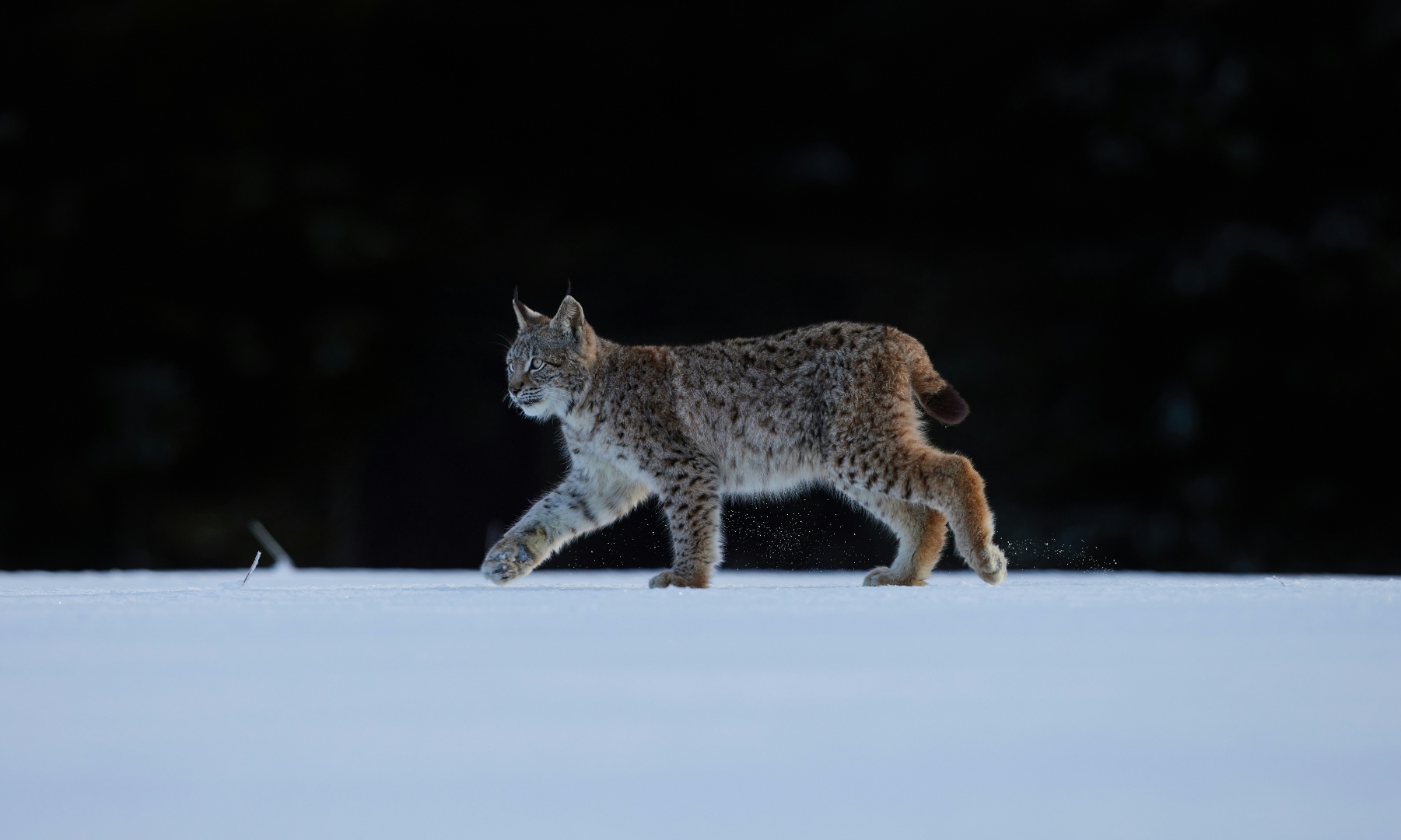
Nebraska Bobcat Hunting: Season Dates, Permit Requirements, and What to Expect
Nebraska bobcat hunting season runs December 1 through February 28 — a tight three-month window that lines up with the coldest part of the Sandhills winter and some of the most productive predator hunting of the year. Bobcats are classified as furbearers under Nebraska law, which means the regulations are more involved than coyote hunting. You need the right permit, you're required to register your harvest, and there are international trade rules for the pelts if you plan to sell them.
We run guided bobcat hunts here at ReWild Ranch in Sargent, Nebraska through the full December–February season, typically as part of our all-inclusive predator package that also covers coyotes and badger. Bobcats are the most challenging predator on our property to call consistently — they're patient, visually focused, and they'll stop 80 yards out and stare at your decoy for five minutes before deciding whether to commit. When one does come in, it's memorable.
This article covers the regulations straight from Nebraska Game and Parks Commission (NGPC) official sources and what actually works in the field for Sandhills bobcats.
Nebraska Bobcat Season Dates
The 2025–26 Nebraska bobcat hunting and trapping season runs:
December 1, 2025 – February 28, 2026
That's the full harvest window — the only time of year you can legally kill a bobcat in Nebraska. Outside those dates, a "running season" runs March 1 through November 30, during which you can pursue bobcats with hounds but cannot harvest them.
Season dates have been stable in Nebraska for several years. The NGPC Hunting Seasons page confirms the 2025–26 dates, and no changes to bobcat-specific regulations were identified for the upcoming season.
A few practical notes about timing within the season:
- December is excellent for fresh snow that shows tracks, and cats are moving well in the cold. It's also early enough that they haven't been called to repeatedly.
- January hits the peak of bobcat breeding season. Cats are more aggressive and territorial, which increases responsiveness to calling — especially bobcat vocalizations.
- February is the final push. Cats may be slightly more call-shy by now, but the season closes February 28 regardless of conditions.
Our guided predator hunts are bookable throughout the December–February window. If you want to target bobcat specifically, December and January are our top picks. Call Danielle at (308) 730-4116 to check available dates.
Permit Requirements: What You Need Before You Hunt
Bobcats are regulated furbearers in Nebraska. Unlike coyotes, which require no permit for residents, bobcat hunting requires specific paperwork regardless of whether you're a resident or non-resident.
Nebraska Residents
Resident hunters age 16 and older need two things:
- Nebraska Fur Harvest Permit — $18 annual fee
- Nebraska Habitat Stamp — $25
Both are required for the running season and the harvest season. The permit and stamp are available through the NGPC online system or at any license vendor in the state. Residents age 69 and older, and eligible veterans age 64 and older, may purchase a combination hunt/fish/fur harvest permit for $5.
Non-Resident Hunters
Non-residents need a Non-Resident Fur Harvest Permit, which costs $227 for the annual permit. Two important restrictions apply:
First, these permits are only available to residents of states with reciprocal permit arrangements with Nebraska. Not every state qualifies. Before booking, confirm your state of residence is eligible by contacting NGPC at (402) 471-5457.
Second, non-resident fur harvest permits cannot be purchased online. They must be purchased in person or by mail through the Nebraska Game and Parks Lincoln headquarters. Plan accordingly — don't show up in Sargent expecting to buy your bobcat permit at a local vendor.
Non-resident hunters at ReWild Ranch need to have their permits sorted before arrival. We can point you toward the right NGPC contact, but the permit procurement is the hunter's responsibility.
Mandatory Tagging: Every Harvested Bobcat Must Be Registered
This is the step that catches first-time Nebraska bobcat hunters off guard. Every bobcat harvested in Nebraska must be registered and officially tagged by the NGPC within two business days after the close of the harvest season — meaning by approximately March 2 following the February 28 season close.
The process: 1. After harvest, preserve the carcass appropriately (frozen or kept cool) 2. Contact your nearest NGPC conservation officer or NGPC office to arrange tagging 3. The NGPC tags the bobcat and creates the legal documentation required before any sale
A practical tip directly from the NGPC on preparing frozen carcasses for tagging: insert a Popsicle stick, pencil, or similar object between the lower eyelid and the eye so it exits behind the upper lip. This allows the commission to tag the bobcat even when frozen. Alternatively, bring the carcass thawed or already skinned.
All bobcats must be tagged before the pelt is sold. Attempting to sell an untagged pelt is a violation regardless of when the animal was taken.
If you harvest a bobcat on our property, our guides will walk you through the tagging process and can connect you with the local conservation officer. It's straightforward — just don't skip it.
CITES Requirements for Bobcat Pelts
Bobcat (Lynx rufus) is listed under CITES Appendix II, which regulates international trade in the species. For most hunters, this only matters if you plan to export a pelt internationally.
Domestic sales within the United States: Nebraska's mandatory state tagging by NGPC serves as the primary legal documentation for interstate commerce. The NGPC-registered tag verifies legal acquisition and is what you need for selling pelts within the country.
International export: Bobcat skins intended for export from the United States require a U.S. CITES tag permanently attached through the skin and locked in place before export. The CITES tag includes the US-CITES logo, an abbreviated state of harvest code, a standard species code, and a unique serial number. To export, a completed USFWS Form 3-200-26 must be submitted to USFWS Law Enforcement or the U.S. Management Authority. Pelts without a CITES tag cannot legally leave the country.
For hunters on a guided hunt at ReWild Ranch who want to keep their bobcat pelt, the NGPC state tag is what you need. The CITES export process only applies if you plan to take the hide out of the United States.
Calling Tactics: What Works for Sandhills Bobcats
Bobcats hunt differently than coyotes, and calling them requires a different approach. The single most important distinction: coyotes respond to sound and move fast; bobcats respond to sound and movement and move slow. A bobcat that can't see something to focus on will sit down and eventually leave without committing. Decoys are not optional — they're essential.
Sound Selection
The best sounds for drawing bobcats in Nebraska Sandhills terrain, roughly in order of effectiveness:
Bird distress sounds — This is the top category for bobcats, and it surprises hunters who expect rabbit calls to dominate. High-pitched, busy-sounding bird calls draw cats exceptionally well. On a FoxPro unit, sounds like Young Blue Jay Distress, Yellow Hammer Woodpecker, and Woodpecker Distress consistently produce bobcat responses on our property. These sounds match what bobcats actively hunt in the Sandhills — ground-nesting and low-perching birds are a primary food source.
Baby cottontail distress — The universal starting call for any predator. For bobcats, run it continuously for 5–6 minutes without pausing. Unlike coyote calling where intermittent bursts with silence between them is standard, bobcats need a steady stream of sound to maintain interest. Dead air kills your stand.
Mrs. McCottontail — A raspy, more aggressive rabbit sound. Switch to this immediately after baby cottontail if a cat hasn't committed. It's among the most effective bobcat sounds in the field.
Bobcat in heat / aggressive bobcat vocalizations — January is peak breeding season for Nebraska bobcats. During this window, bobcat vocalizations — soft, aggressive meowing patterns — trigger strong territorial and breeding responses. Combining the e-caller with a mouth call on a double-reed diaphragm while running this sound adds realism that's hard to replicate with electronics alone.
The key calling rule for bobcats: keep it continuous. Play each sound for 5–8 minutes without stopping. A cat working toward you at its deliberate, stop-and-stare pace needs that sustained audio signal to keep coming.
Decoy Placement
Set a motion decoy approximately 20 yards in front of your position, in a visible opening. The Mojo Critter or any spinning/flapping-wing decoy that mimics small prey works well. If you're running a FoxPro with a bird topper on the decoy arm — combine it with the Young Blue Jay Distress sound — you get simultaneous audio and visual stimulus that is extremely effective at pulling cats that last 30 yards into range.
Bobcats will approach to the wood's edge or a grass line and stop. They'll stare. Without something moving in their field of view, they sit there indefinitely and eventually lose interest. The decoy is what pulls them through that last stretch.
Stand Duration and Setup
Plan for 20–30-minute stands minimum when hunting bobcats — significantly longer than the 12–15-minute stands we run for coyotes. Bobcats work toward calls at a walk, circling and pausing to observe. Giving up at 15 minutes means you've likely already burned a cat that was 150 yards out and watching.
During the December–February season, run your stands in the hours with the most bobcat movement:
Prime evening window: Roughly 3 hours before sunset through midnight. This is when bobcats are most active and most likely to respond to calls.
Morning window: One hour before sunrise through 4 hours after. Slightly less productive than evenings on average, but still strong, especially in cold weather.
Concealment matters more for bobcat than for coyote. Bobcats are watching — any movement you make during the stand will stop a cat cold. Get settled before you start calling and don't shift around.
Sandhills-Specific Considerations
The rolling grass hills and cedar-lined draws of the Sandhills create ideal bobcat habitat. Our property sees good bobcat density because of the turkey and quail populations — high bird numbers support cats year-round. The draws and cedar breaks are where cats bed and travel. Set up on the edge of a draw with a clear sight line toward the heavy cover, call into the cedars, and watch your downwind side.
For a broader look at predator hunting tactics on this terrain, see our pillar article: Guided Predator Hunting Nebraska.
Bobcat vs. Coyote: Key Differences for Hunters Making the Transition
If you've hunted coyotes but not bobcats, a few adjustments will make you more effective:
- Speed: Coyotes can charge from 400 yards in 60 seconds. A bobcat that covers the same ground might take 20 minutes. Patience is not optional.
- Wind: Critical for coyotes; less so for bobcats. Bobcats trust their eyes and ears more than their nose. You still don't want to be directly downwind, but cats won't circle aggressively the way coyotes do.
- Calling style: Intermittent for coyotes, continuous for bobcats.
- Decoys: Helpful for coyotes, nearly mandatory for bobcats.
Our guides can target either species on the same morning depending on conditions and what the client wants to focus on. Coyote and bobcat stands require different setups, but the terrain is productive for both.
Book Your Hunt
Our 2-day/3-night predator hunt at ReWild Ranch runs $1,795 all-inclusive — lodging, home-cooked meals, guide, thermal and night vision equipment. The package covers coyote year-round, bobcat December through February, and badger November through February. No trophy fees on any predator species.
Call Danielle at (308) 730-4116 to book. For a full breakdown of what the hunt includes and how we run our stands, see our hub: Guided Predator Hunting Nebraska.
If you're combining a bobcat hunt with night coyotes, our thermal equipment makes the night portion extremely productive. Details on that setup: Thermal and Night Vision Coyote Hunting in the Nebraska Sandhills.
Frequently Asked Questions
When does the Nebraska bobcat hunting season open and close each year?
The Nebraska bobcat hunting and trapping season runs December 1 through February 28 each year. A running season (pursuit with hounds, no harvest) runs March 1 through November 30. The harvest season has been consistent at these dates for multiple years, and the NGPC confirms the 2025–26 season follows the same December 1–February 28 window. Always verify current dates directly at outdoornebraska.gov before hunting.
What fur harvest permit is required to legally harvest a bobcat in Nebraska?
Nebraska residents age 16 and older need a Nebraska Fur Harvest Permit ($18) and a Habitat Stamp ($25). Non-residents need a Non-Resident Fur Harvest Permit ($227), which must be purchased in person at the NGPC Lincoln headquarters — it cannot be purchased online — and is only available to residents of states with reciprocal permit arrangements with Nebraska. Contact NGPC at (402) 471-5457 to confirm your state qualifies before booking.
What calling and decoy setup is most effective for hunting bobcats in the Sandhills?
Bird distress sounds — particularly blue jay and woodpecker calls — are the top-producing sounds for Sandhills bobcats, followed by baby cottontail and the raspy Mrs. McCottontail rabbit call. Run each sound continuously for 5–8 minutes without pausing; bobcats need sustained audio to stay engaged. A motion decoy (Mojo Critter or similar) placed 20 yards in front of your position is near-mandatory — bobcats that can't see movement will stop short and leave. Plan for 20–30 minute stands minimum, timed for the 3 hours before sunset through midnight peak activity window.
check out other posts
Nebraska Sandhills Lodge: Where to Stay When You're Not Hunting
Buffalo Hunts: What a Real Guided Hunt Looks Like in 2026
