BLOG
Guided Predator Hunting in Nebraska: Coyote and Bobcat Year-Round
Guided Predator Hunting in Nebraska: Coyote and Bobcat Year-Round
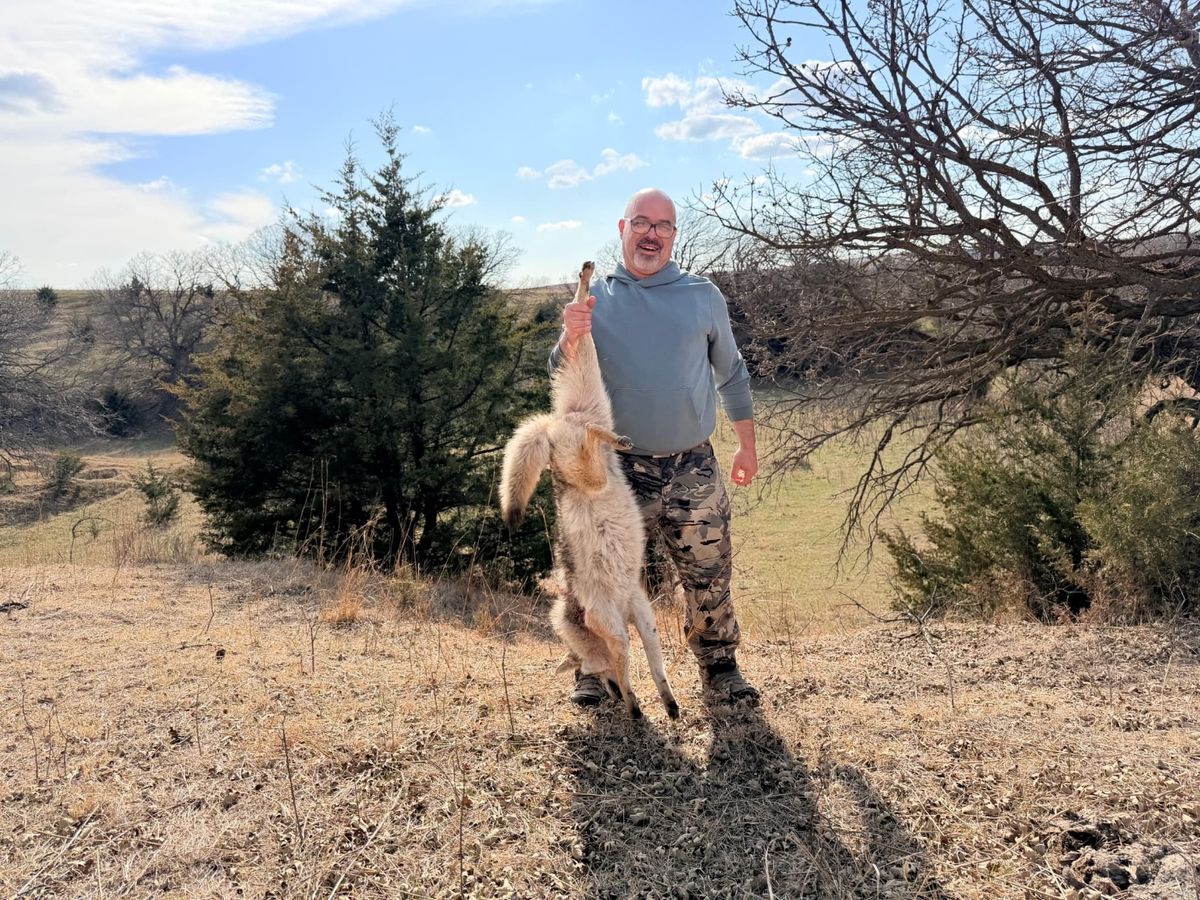
Nebraska is one of the best states in the country for guided predator hunting, and the Sandhills is where serious hunters come to prove it. Coyotes run year-round with no bag limit, bobcat season opens every December, and the rolling grass hills of Custer County hold predator numbers that most hunters have to see to believe.
At ReWild Ranch, we've built a guided predator hunting program around what we do every day as a working bison ranch — keeping coyotes off bison calves, managing our land, and running disciplined hunts across private Sandhills ground. Our all-inclusive package gives you lodging, home-cooked meals, experienced guides, thermal and night vision equipment, and access to coyote, bobcat, and badger — all for $1,795 with no trophy fees.
If you're looking for guided predator hunting in Nebraska that's honest about what you'll get and built around real ranch management rather than marketing copy, here's everything you need to know about hunting predators at ReWild Ranch — regulations, tactics, gear, and how to book.
Why Nebraska's Sandhills Are Built for Predator Hunting
The Nebraska Sandhills cover roughly 19,300 square miles of sand-stabilized grass hills, subirrigated meadows, and chain lakes stretching across central and north-central Nebraska. There's nothing else like it in North America. For predator hunters, it delivers several advantages that most terrain simply can't.
Open sight lines. In the Sandhills, you can watch a coyote work your call from 800 yards out, read whether it's committed or hanging up, and make your shot or adjust your strategy before the animal is even close. In brushy or timbered terrain, a coyote might be 40 yards away before you see it. Here, you run the hunt.
High predator density. The Sandhills supports healthy populations of cottontails, jackrabbits, white-tailed deer, wild turkey, and waterfowl — all of which concentrate in the draw bottoms and marshes between hills. Where prey concentrates, predators follow. Coyote densities in Custer County are among the highest in Nebraska, and the bobcat population in the Sandhills cedar draws is consistent and huntable every winter.
Year-round hunting. Nebraska classifies coyotes as a nongame species — no closed season, no bag limit for residents, and no Habitat Stamp required. That means we run predator hunts in July just as readily as we run them in January. The tactics differ, but coyotes are on the ground and callable every month of the year.
Terrain that rewards strategy. The rolling hills and draw bottoms create natural funnels, approach corridors, and caller placement opportunities that guide our setups. Coyotes moving between marshes and upland grass cross predictable terrain features. When you learn to read the draws, you can call the shot before the dog even hears the call.
What's Included in the $1,795 All-Inclusive Predator Hunt
The price is $1,795 per hunter for a 2-day/3-night hunt, and here's exactly what that covers:
Lodging. Three nights at the ReWild Ranch lodge, located at 81785 Road 457, Sargent, Nebraska 68874. The Copper Bison Tasting Room is on-site for evenings between hunts.
Meals. All meals are home-cooked at the ranch — breakfast, lunch, and dinner for the full stay. You don't need to plan around restaurants or grocery stores in Sargent.
Professional guide service. Our guides are experienced Sandhills hunters who know this ground. They pick the stands, run the caller, and manage the wind — your job is to shoot straight.
Thermal and night vision equipment. Night hunting for coyotes is legal on private land in Nebraska, and we provide the optics. You don't need to own a thermal scope to hunt with us after dark.
Three species. The package covers coyote (year-round), bobcat (December through February), and badger (November through February). No trophy fees on any predator.
No hidden costs. What you don't bring: meals, lodging, guide fee, equipment rental, or trophy charges. What you do bring: your rifle, your hunting license if you're a non-resident, and your ammunition. That's it.
For comparison, the nearest Nebraska competitor with a similar all-inclusive setup charges $1,950 for a daytime coyote-only hunt, and $2,550 for a night thermal hunt. The closest Sandhills outfitter at a lower price point excludes meals. ReWild's $1,795 package, as priced and structured, beats the regional market on both inclusions and value.
Coyote Hunting: Year-Round, No Bag Limit, Night Hunting Legal
Nebraska coyotes are classified as a nongame (unprotected) species by the Nebraska Game and Parks Commission, which puts them in a different regulatory category than furbearers like bobcat or red fox. The practical result for hunters is simple: no closed season, no bag limit for residents, and no Habitat Stamp required.
Licensing for non-residents. If you're coming from out of state, you'll need a Nebraska Hunt (Small Game) Permit — $109 for an annual permit, or $76 for a 2-day permit as of the 2024–25 season. That's the only licensing requirement. No Habitat Stamp, no additional permit.
Night hunting. Coyote hunting at night is legal on private land in Nebraska with landowner permission. Artificial lights may be used on foot — including laser rangefinders, handheld illuminators, and lamp-based systems — but cannot be used from a vehicle or boat under Nebraska Revised Statute 37-514. All ReWild Ranch night hunting is conducted on foot or from fixed ground positions on our private property.
Electronic calls. Legal for coyotes without restriction. NGPC explicitly states that electronic predator calls are allowed when hunting coyotes.
Thermal and night vision. Both thermal scopes and night vision devices are legal for coyote hunting in Nebraska. The prohibition on electronic night vision that appears in Nebraska's administrative code applies only to game animals and game birds — coyotes are nongame, so that restriction does not apply. Nebraska has also recently updated its regulations to explicitly permit thermal imaging for night hunting operations.
For a complete breakdown of Nebraska's coyote hunting regulations — including firearm restrictions during deer season, county-specific rules, and the non-resident licensing process — see our Nebraska Coyote Hunting Regulations guide.
Bobcat Hunting: December Through February in the Sandhills
Nebraska's bobcat season runs December 1 through February 28 each year, making winter predator hunts at ReWild Ranch an opportunity to chase two species in the same stand. The Sandhills cedar draws hold a strong bobcat population, and calling a cat into range is one of the most challenging and satisfying things you can do with an e-caller.
Regulations overview. Bobcat is classified as a furbearer in Nebraska, which means season dates apply and a permit is required. Resident hunters need a Nebraska Fur Harvest Permit ($18) plus a Habitat Stamp ($25). Non-residents need a non-resident Fur Harvest Permit ($227), which can only be purchased at the NGPC Lincoln office in person — not online — and is only available to residents of states with reciprocal agreements with Nebraska. Contact NGPC at 402-471-5457 for current reciprocity information.
Mandatory tagging. Every bobcat harvested in Nebraska must be registered and officially tagged by NGPC within two business days after the close of the season (around March 2). Tags must be applied before any pelt is sold. If you're keeping a bobcat, plan ahead for the tagging process. Our guides walk you through it.
Hunting tactics. Bobcats are fundamentally different from coyotes in how they respond to calling. Where a coyote may charge in within 90 seconds of hearing a distress call, a bobcat will circle, stop, stare, and evaluate for 20 to 30 minutes before committing — or walking off. Continuous calling (no dead air between bursts) keeps a cat engaged. Bird distress sounds — particularly woodpecker and blue jay distress — outperform rabbit calls for bobcat, especially paired with a motion decoy placed 20 yards in front of your position.
The best bobcat hunting windows on our property are dusk through midnight and the first two hours after sunrise. Cold weather during December and January concentrates bobcats in the cedar draw edges, where they're working rabbit corridors and deer carcasses. When daytime temperatures drop below 25°F, mid-morning movement also picks up.
Stand patience pays. Our guides have called bobcats that took 28 minutes to commit from the wood's edge. That's 28 minutes of holding perfectly still, keeping the caller running, and waiting out a cat that was deciding whether the sound was real. Hunters who can do that come back with cats. Hunters who move too early just find tracks.
For the full bobcat hunting breakdown — tactics, calling sequences, decoy setups, and season details — see our Nebraska Bobcat Hunting Season guide.
Night Hunting with Thermal and Night Vision
Thermal imaging changed predator hunting the way the compound bow changed archery. A coyote crossing a Sandhills meadow at 2 a.m. glows against cool grass like a candle in a dark room. There is nowhere for an animal to hide from a quality thermal scope, and the Sandhills terrain — open, rolling, minimal brush — is where thermal hunting is at its best.
What we provide. Our guides carry Nite Site night vision and thermal optics on night hunts. You do not need to own your own gear. If you have a thermal setup you're comfortable with, bring it — but it's not required.
Thermal vs. night vision. Thermal detects heat signatures and requires no ambient light — it works in total darkness, through light fog, and at detection ranges up to 1,000 yards and beyond on quality units. Night vision relies on ambient light or an IR illuminator and produces a higher-detail image at closer ranges but cannot compete with thermal for detection distance or all-conditions performance. For Sandhills coyote hunting, thermal wins decisively.
Cold is your friend. The colder the night, the better the thermal contrast. Below 30°F, a coyote's body heat registers dramatically against the cooler grass and soil background. January and February nights in the Nebraska Sandhills can push well below zero — which is terrible for sleeping and outstanding for thermal hunting.
Night stand structure. Night stands run longer than day stands. A coyote that hears your call at 600 yards needs time to cover that distance in the dark. Our guides typically run 20 to 30 minute stands at night, with 30 to 45 second call bursts separated by 3 to 5 minute silent intervals. Silence is as important as the call — it draws a committed dog in without giving away your exact position.
For detailed guidance on equipment selection, scan-and-shoot technique, and legal night hunting setup in Nebraska, see our thermal and night vision coyote hunting guide.
Electronic Calling Strategy in Open Prairie
Running an e-caller in the Sandhills is not the same as running one in brushy river bottom or timber. Open rolling terrain rewards specific caller placement, high-volume projection, and disciplined wind management that changes everything about how you set up a stand.
Caller placement. The single most important rule: place your speaker 30 to 50 yards in front of and away from your shooting position. A coyote approaching an e-caller focuses its eyes on the sound source — it's not looking for you. When the caller is 40 yards down the hill and you're set up with a clear line of sight on the approach lane, the dog presents a clean shot while it's focused forward.
Wind. Wind dictates stand selection before anything else. You want wind moving from the direction coyotes are expected to come toward you — or at minimum, a crosswind. A Sandhills coyote that gets your scent at 200 yards will be gone before you ever see it. Check wind direction when you exit the truck, when you reach your stand site, and again before you call. In open country, a wind shift mid-stand means picking up and moving.
Calling sequences. Our guides run structured sequences rather than running the same distress loop for 20 minutes. A typical open-country stand starts with subtle cottontail distress at moderate volume, progresses to bird distress (crow, woodpecker) to shift trigger types, then transitions to pup distress or coyote vocalizations for the back half of the stand. Switching sound categories — rather than just changing individual sounds within the same category — is what keeps educated coyotes from pattern-reading your call.
Stand duration. In high-visibility open terrain, most coyotes respond within the first 8 minutes if they're going to respond at all. Our guides move every 15 to 20 minutes, covering maximum ground and hitting fresh dogs rather than burning time on a stand that's already played out. On a 2-day hunt in prime conditions, we'll typically run 12 to 18 stands per day.
Reading incoming coyotes. The open terrain that makes Sandhills stands efficient also lets you watch the whole approach. A coyote trotting directly toward your caller is committed — don't move, don't touch the caller, just get ready. A coyote that crests a far ridge and then drops into a draw is still working your call from the bottom, not leaving — stay still and wait. A coyote that stops at 400 yards and stares is hanging up; that's when our guides switch sound categories or drop volume to draw it the final distance. Reading that body language is the difference between a productive stand and a coyote that ghosts you.
For a deeper look at calling sequences, sound selection, and how we adjust for Nebraska Sandhills terrain specifically, see our electronic call coyote hunting strategy guide. And if you're interested in how summer calling differs from winter, check out our summer coyote hunting in Nebraska guide.
Rifles, Calibers, and What to Bring
Nebraska has no caliber-specific restrictions for coyote hunting. You can hunt with anything from a .17 HMR to a .308 — with the practical caveat that open Sandhills terrain regularly produces shots at 200 to 400 yards, which rules out rimfire options for most hunters.
What the ranch provides. Thermal and night vision optics for night hunts. Guides carry e-callers and wind checkers. The ranch has a gong range on-site if you want to confirm your zero or practice between hunts.
What you bring. Your rifle, your ammunition, and your hunting license (non-residents). We don't provide firearms.
Caliber recommendations for the Sandhills. Our guides shoot a lot of coyotes and have opinions on this. For open-country Sandhills work where shots regularly push 300 to 400 yards and wind is a constant factor, the .22-250 Rem is the top choice. It drives 55-grain bullets at over 3,600 fps, holds velocity through a crosswind better than the .204 Ruger, and reaches reliably to 400 yards with a quality load. If you want one rifle that can also pull deer or antelope duty, the .243 Win handles coyotes to 700 yards with varmint-weight bullets. The .223 Rem is a practical choice for hunters already set up with an AR platform — effective to 300 yards and cheap to shoot.
Fur-friendly loads. If keeping hides matters to you, bullet construction matters more than caliber. Poly-tipped varmint bullets (Hornady V-MAX, Nosler Varmageddon) fragment internally at high velocity, leaving minimal exit wounds. The .22-250 with a 40-grain Barnes TSX is a gold standard for hunters who want instant kills with almost no pelt damage. FMJ bullets are a fur-preserving option at close range, though NGPC regulations and hunting best practices favor expanding bullets for clean kills.
Suppressor-ready setups. Several guides and guests run suppressed rifles on predator hunts — it's not required, but a suppressor dramatically extends the effective life of a stand by reducing how far a shot spooks uncalled coyotes in the area. Nebraska has no restrictions on suppressor use for coyote hunting on private land.
For a complete breakdown of caliber selection, rifle recommendations, and scope magnification for Sandhills predator work, see our best rifles for coyote and bobcat hunting guide.
Why We Hunt Predators on a Working Bison Ranch
ReWild Ranch is not a predator hunting operation that also happens to have a lodge. It's a working bison ranch in Custer County — a functioning herd, and real predator pressure that affects our animals every year.
Bison calves and coyote predation. Coyotes are opportunistic hunters, and bison calves born in spring are targets. A coyote pair that establishes a denning territory on your property and keys in on calving areas can cause significant losses before you identify and address the problem. We hunt coyotes on this ranch because we have to, not just because hunters pay us to. That's a different foundation from most predator hunting operations.
What that means for hunters. Our guides know where coyotes den, which draws they travel, and which terrain features they use because we're watching and managing predators every day of the year — not just when hunting season opens. When you hunt with us, you're hunting ground that's been actively scouted and managed year-round. The stands our guides pick aren't guesses; they're based on direct knowledge of where animals are moving.
Ecological context. Predator management on a working ranch is a practical discipline, not a trophy exercise. Controlling coyote numbers protects not just livestock but also deer fawns, wild turkey poults, and ground-nesting birds — all of which contribute to the broader wildlife health of the Sandhills ecosystem. Nebraska law explicitly recognizes this under NRS 37-559, which allows any private landowner or tenant to destroy predators preying on livestock or poultry without a permit.
Why this matters for your hunt. A ranch that's actively managing predators year-round isn't burned out by the time hunters arrive. When we take pressure off the coyote population through winter, the spring breeding cycle replenishes it. That's why guests who return year after year find consistent hunting — not a picked-over piece of ground. It's also why we take summer predator control seriously; the summer coyote hunting in Nebraska page covers the case for hunting year-round in detail.
For the full story on how predator control integrates with ranch management at ReWild — and why the Sandhills is ground zero for this kind of work — read our predator hunting and ranch management guide.
Combo Hunts: Stack Predator with Bison, Elk, or Whitetail
If you're flying from out of state to hunt with us, it's worth knowing that you don't have to book a predator-only trip. ReWild Ranch offers combo hunts that let you combine predator hunting with big game on the same visit — and no competitor in our region runs the same combination.
Bison. Our guided bison hunt is $5,800 all-inclusive. A bison hunt paired with a predator package means mornings on coyotes and an afternoon or full-day bison hunt during your stay. There's no other place in the Sandhills — or arguably in Nebraska — where you can shoot a wild bison and call coyotes in the same 48 hours on the same property. Coyotes that work our bison pastures are the same ones we're managing against calves in the spring, so a combo hunt makes practical sense on both ends.
Elk. Our elk hunts are $12,995 all-inclusive per hunter. Elk are on the property year-round, and the predator season aligns with late elk rut activity in the Sandhills. If you've drawn a Nebraska elk tag or are hunting a private land opportunity with us, coyote hunting at dawn and dusk fills the time between elk stands productively.
Whitetail and turkey. Whitetail season in Nebraska runs October through December, overlapping with the early bobcat season opening December 1. For hunters who want a deer hunt with a predator bonus or want to extend a deer trip with a few days of coyote and bobcat calling, the timing works perfectly.
For complete details on combo hunt pricing, scheduling, and what species are available in each season, see our combo predator hunt guide.
How to Book Your Predator Hunt
Contact Danielle directly at (308) 730-4116.
That's the fastest way to check dates, confirm availability, and ask any questions about the hunt. ReWild Ranch takes bookings for predator hunts year-round — coyote season has no close date, and we run hunts in every month of the year. Bobcat and badger are available December through February.
What to have ready when you call: - How many hunters in your party - Preferred dates (we'll work around your schedule and advise on best conditions) - Whether you want a night hunting component or prefer daytime stands only - Any combo hunt interests (bison, elk, whitetail)
Deposit and booking. A deposit confirms your dates. Full details on deposit amounts and cancellation policy are available when you call.
What to bring: Your rifle chambered in an appropriate caliber for 100–400 yard shots, ammunition, and your Nebraska non-resident Hunt (Small Game) Permit if you're out of state ($109 annual or $76 for 2 days). Everything else — lodging, meals, guide, thermal gear, e-callers — is covered.
Non-hunting guests. If your partner or a family member wants to come along but doesn't hunt, non-hunting guests are welcome at $150 per day. The Copper Bison Tasting Room, on-site ranch activities, and the surrounding Sandhills landscape make it a worthwhile trip even for those who stay back at the lodge. It's a detail most outfitters don't mention and we think is worth knowing up front.
We're a small operation that takes a limited number of predator hunters each year. If you have specific dates in mind, call early — winter weekends fill faster than you'd expect once word gets out about conditions.
Location: 81785 Road 457, Sargent, Nebraska 68874. Sargent is in Custer County, roughly 2.5 hours west of Lincoln and 2 hours north of Kearney. Most guests fly into Grand Island (GRI) or North Platte (LBF) and drive the rest of the way.
Frequently Asked Questions
Is coyote hunting open year-round in Nebraska, or are there seasonal restrictions?
Coyote hunting is open year-round throughout Nebraska with no closed season. Nebraska classifies coyotes as a nongame (unprotected) species — not a furbearer — which means no season dates, no bag limit for residents, and no Habitat Stamp required. Non-residents must have a Nebraska Hunt (Small Game) Permit, which costs $109 annually or $76 for a 2-day permit. This year-round status is what allows ReWild Ranch to offer guided predator hunts in every month of the year, from January through December.
What does the $1,795 all-inclusive predator hunt package at ReWild Ranch include?
The $1,795 package covers 2 days of hunting and 3 nights of lodging at ReWild Ranch in Sargent, Nebraska. All meals are included — breakfast, lunch, and dinner, home-cooked at the ranch. A professional guide is included for both hunting days, along with thermal and night vision equipment for night hunts, electronic callers, and access to coyote (year-round), bobcat (December through February), and badger (November through February). There are no trophy fees on any predator species. Non-resident hunters need to bring their own Nebraska Hunt (Small Game) Permit and their own rifle and ammunition — everything else is covered.
Can I use night vision or thermal optics for coyote hunting in the Nebraska Sandhills?
Yes. Both thermal scopes and night vision devices are legal for coyote hunting in Nebraska. The restriction on electronic night vision that appears in Nebraska's administrative code applies only to game animals and game birds — coyotes are nongame, so that prohibition does not affect them. The Nebraska Game and Parks Commission explicitly states that thermal scopes are allowed when hunting coyotes. Night hunting is legal on private land with landowner permission; it is not permitted on public land (WMAs and state recreation areas). ReWild Ranch provides Nite Site thermal and night vision equipment as part of the all-inclusive package, so you don't need to own your own optics to hunt after dark with us.
check out other posts
Nebraska Sandhills Lodge: Where to Stay When You're Not Hunting
Buffalo Hunts: What a Real Guided Hunt Looks Like in 2026
