BLOG
Summer Coyote Hunting in Nebraska: Why Off-Season Predator Hunts Are Worth It
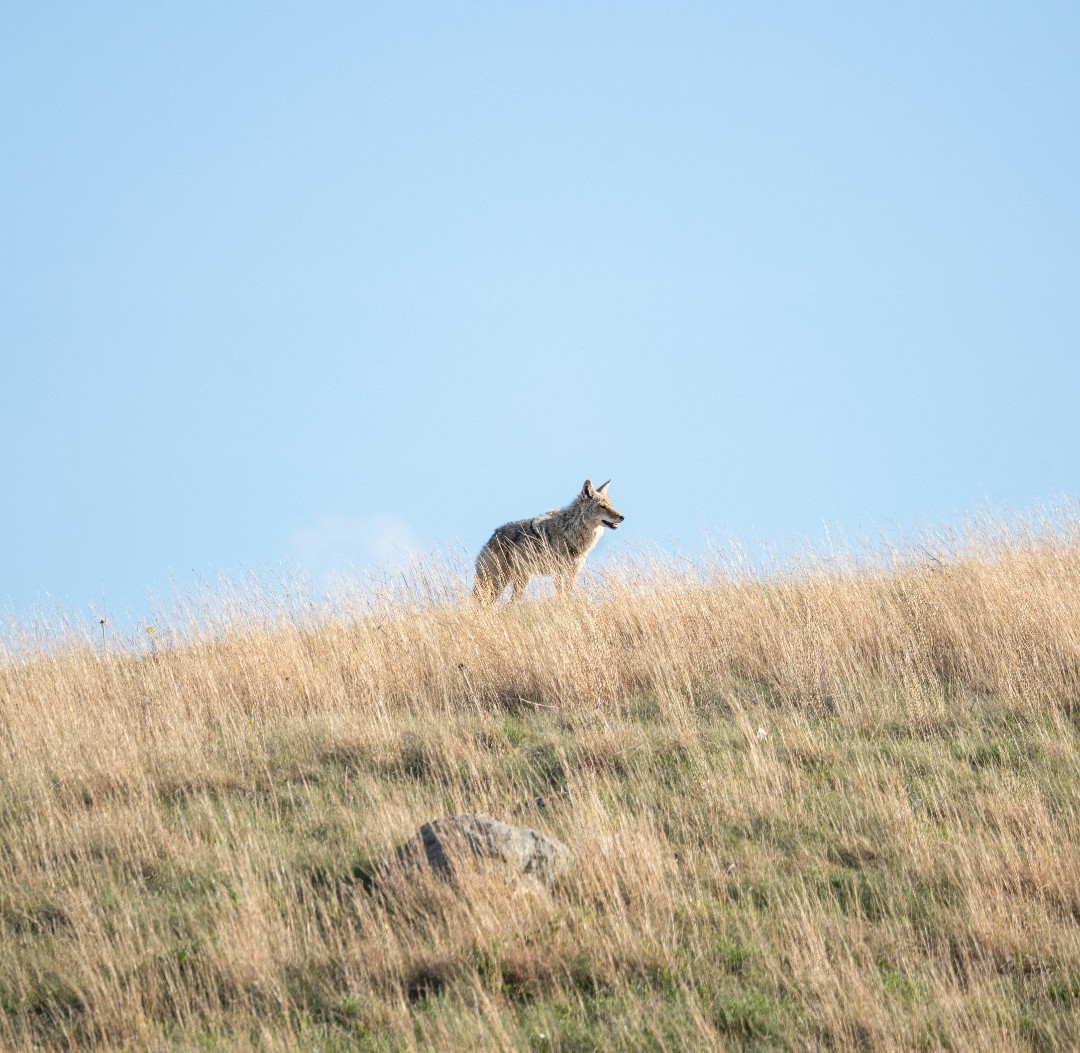
Summer Coyote Hunting in Nebraska: Why Off-Season Predator Hunts Are Worth It
Most coyote hunters shut it down when turkey season closes and don't pick up a rifle again until November. We don't. At ReWild Ranch, summer coyote hunting in Nebraska runs through July and August just like it does in December, because we're not hunting for pelts — we're hunting to protect livestock and knock down predator numbers before the fall. If you've never run stands in June or July, you're missing some of the most committed, aggressive coyote action of the year.
Here's what changes in summer, why it still works, and what you need to do differently.
Why Summer Coyote Hunting Works: The Pup Distress Trigger
From late April through August, every adult coyote on the property is in some stage of raising pups. Females whelp in mid-April in the Nebraska Sandhills, typically producing five to seven pups per litter. By June, those pups are out of the den and moving, but the adults are still feeding them, protecting them, and responding to any threat as if their lives depend on it.
That's where pup distress calls come in. When you play a pup-in-distress sequence — a yelping, screaming coyote pup — adult females don't hesitate. They don't circle downwind three times and hang up 400 yards out the way a winter coyote will. They come in rescue mode, fast and direct, usually within the first 60 seconds of the call. We've had females clear 200 yards of open Sandhills meadow at a dead sprint before the sequence even finished.
Male coyotes respond too, though they're somewhat less predictable than females. Both adults believe a pup has gotten into trouble — tangled with a badger, caught in brush, separated from the family group. The territorial instinct and parental drive combine into one of the most reliable response triggers in predator hunting.
The sequence we use in summer is different from our winter approach. We open with a lone coyote howl — just a locator, saying "I'm in the area, who's home?" We let that sit for 30 to 60 seconds and listen. If nothing responds, we run two minutes of jackrabbit distress to establish that something's getting eaten nearby, then pivot hard into pup distress for the close. That three-stage sequence — locate, distress, escalate — is deadly June through September.
Seasonal Behavior Changes That Favor Summer Hunting
Coyotes don't behave the same in July as they do in January, and adjusting for those differences is what separates hunters who call summer dogs in consistently from those who go home empty.
In winter, coyotes are hunger-driven. Cold weather burns calories fast, prey is concentrated and predictable, and two animals traveling together (breeding pairs in January and February) both respond to the same stand. Your kill rate per stand tends to be lower because winter coyotes have seen more pressure, heard more calls, and survived by being cautious.
In summer, you have two populations working for you at once. Adult coyotes respond to pup distress with parental aggression. Juvenile coyotes — born that spring — are naive. They haven't been called to, they haven't had a bullet whistle past their ears, and they'll come in to almost anything out of curiosity. By August, the Sandhills holds three to four times the number of coyotes it will by the following spring after a hard winter and trapping season. You're hunting into a population that's near its annual peak.
The practical downside: coyotes go underground when the temperature climbs. By 9 or 10 in the morning when it hits 80°F, you're done for the day. Summer hunting is a morning game, full stop. We're in position before first light — often 5:00 am — and we run stands hard for two to three hours until the heat shuts things down. Late afternoon, starting around 6:30 or 7:00 pm, gives you a second window of an hour or two before dark. Midday is wasted time; don't fight it.
Wind management matters just as much in summer as in winter. Coyotes use their nose year-round. Set up with the wind in your face or quartering across, caller placed 40 to 50 yards in front of your position, and watch the downwind side carefully. Summer dogs that get your scent before committing will vanish without you ever seeing them.
Gear Differences for Summer Predator Hunts
If you're planning a summer predator hunt and you're bringing your February kit, leave the wool base layers in the truck. Here's what actually matters when it's 75°F at sunrise in the Sandhills:
Clothing: Lightweight, moisture-wicking camouflage. We use Sitka Gradient or similar warm-weather camo. The cover in Nebraska Sandhills draws in summer is tall grass and scattered cedar — you don't need heavy brush camo, you need something that breaks your outline and breathes. Long sleeves are non-negotiable for mosquitoes and ticks.
Bug protection: This isn't optional. The Sandhills in summer have mosquitoes, ticks, and chiggers. Treat your gear with permethrin before the hunt and bring DEET spray. Sitting motionless in tall grass for 15 minutes without bug protection turns an effective stand into a miserable exercise in distraction.
Hydration: Bring more water than you think you need. We carry 64 ounces per hunter for a morning hunt and often finish all of it. Dehydration makes you sloppy — you move more, fidget more, and blow stands.
Optics: Your binocular setup matters more in summer because grass is tall and green, which means it's harder to pick up a coyote at 300 yards against matching vegetation. We run 10x42 binoculars and sweep draws and field edges constantly between stands. We also bring a quality rangefinder — in open Sandhills terrain, shots past 250 yards happen regularly, and guessing distances on a flat, featureless landscape is a reliable way to miss.
Calls: We still use the FoxPro X360 in summer. If anything, the pup distress sounds on the unit see their heaviest use this time of year. A mouth-blown pup howl can be effective for locating, but the electronic caller gives you hands-free operation and keeps your rifle ready.
What we don't bring: heavy clothing, hand warmers, or any expectation of sitting still for 20-minute night stands. Summer is a fast-moving, early-morning game.
Ranch Management: Why We Hunt Summer Hard
We're not going to pretend summer coyote hunting is about the fur. It isn't. Summer pelts are worth essentially nothing commercially — the coat is thin, short, and lacks the dense underfur that makes winter hides valuable. Anyone who tells you otherwise is selling something.
What summer hunting is about, on a working ranch like ours, is livestock. We run bison on this property year-round, including spring and summer calving. A bison calf in its first three weeks of life is vulnerable. An adult cow bison will protect her calf aggressively, but a pack of coyotes working together can pull a newborn calf away from a distracted herd. We've seen it happen. It's the reason we run predator control from March through August on the same ground we'll open to hunters in the fall.
The USDA's National Agricultural Statistics Service has documented that coyotes account for the majority of sheep and lamb deaths attributed to predators nationally, and cattle operations in the Northern Plains report meaningful calf losses every year. For a small to mid-size ranch, losing even two or three calves to coyotes represents several thousand dollars in lost income. This isn't abstract — it affects the economics of keeping the ranch running.
Summer hunting also gives us a significant management advantage heading into fall and winter: if we can knock down the pup-year class before they mature, we're reducing the number of educated adult coyotes we'll face come November. Every naive pup we take in August is one fewer call-shy, educated dog making our winter hunting harder. This is long-game thinking, and it's why serious Sandhills ranchers welcome predator hunters in summer as much as in January.
If you want access to private land in Nebraska — not just here at ReWild, but on the neighbor's ground too — being useful to a rancher in summer is the best relationship-builder there is.
What to Expect on a Summer Predator Hunt at ReWild Ranch
Our all-inclusive predator hunt runs year-round at $1,795 for two days and three nights. That price doesn't change by season. What changes is the itinerary.
Summer hunts run earlier and harder in the mornings. We're typically at the first stand by 5:15 am, run four to six stands before 10:00 am, and then break for a late breakfast back at the lodge. Afternoons are for rest, shooting on the gong range, or exploring the property. We go back out around 6:30 pm for an evening session of two to three stands before dark.
You'll likely see more coyotes per stand in summer than in winter, but the shots are often shorter and faster — these dogs come in committed and quick. Shots at 75 to 150 yards are common. Have your rifle ready at the start of each stand, not leaning against a fence post while you fidget with the caller.
The bison are calving in spring and early summer, which makes some portions of the ranch off-limits during certain mornings to avoid disturbing the herd. Our guides know the property and the rotation. We work around the herd and still cover plenty of country.
Thermal and night vision equipment is included in the package, but we use it differently in summer. Nights are shorter and warmer, and we typically don't run long night stands the way we do in January. The optics see more use at dawn and dusk, in the low-light transition windows.
Book Your Summer Hunt
We take bookings year-round. Summer fills slower than winter, which means better availability if you're flexible on dates. Call Danielle at (308) 730-4116 to check open windows.
If you're pairing a summer predator hunt with another activity — or looking to understand how to combo predator hunts with a bison or whitetail trip — see our guide at /blog-posts/combo-predator-hunt-nebraska.
For the full overview of what our guided predator program includes, start at the pillar: /blog-posts/guided-predator-hunting-nebraska.
And if you're wondering about the regulations that govern year-round coyote hunting in Nebraska, we've covered those in detail at /blog-posts/nebraska-coyote-hunting-regulations.
Frequently Asked Questions
Is summer coyote hunting effective, or do most hunters wait until fall and winter?
Most hunters do wait for fall and winter, which is their loss. Summer coyote hunting in Nebraska is genuinely effective because adult coyotes are in full parental mode and respond to pup distress calls with urgency that winter dogs rarely match. You won't get prime fur, but the action can be faster and more aggressive than anything you'll see in January. The tradeoff is condensed hunting windows — early morning only, before the heat shuts things down.
How do pup distress calls in summer compare to jackrabbit distress calls in winter for effectiveness?
They trigger completely different behavioral responses, which is what makes pup distress so powerful in summer. Jackrabbit distress triggers hunger — a coyote comes to eat. Pup distress triggers parental protection — a coyote comes to rescue. The rescue response is typically faster and more committed, particularly in females. We've had adult females sprint 200 yards to the caller in under 60 seconds. Jackrabbit distress works year-round and is our default starting call in winter, but for June through August, pup distress is the closer that seals the deal.
What gear changes are needed for a summer predator hunt versus a cold-weather hunt?
The core kit — rifle, e-caller, binoculars, rangefinder — stays the same. What changes is clothing (lightweight moisture-wicking camo instead of insulated layers), bug protection (permethrin-treated clothes and DEET spray are non-negotiable in Sandhills summer), and hydration (carry at least 64 ounces per person). You'll also shift your timing — plan to be done by 10:00 am and go back out in the evening, rather than hunting all day the way you can in cold weather.
check out other posts
Nebraska Sandhills Lodge: Where to Stay When You're Not Hunting
Buffalo Hunts: What a Real Guided Hunt Looks Like in 2026
