BLOG
Combo Predator Hunts: Pairing Coyote Season with a Bison or Whitetail Trip
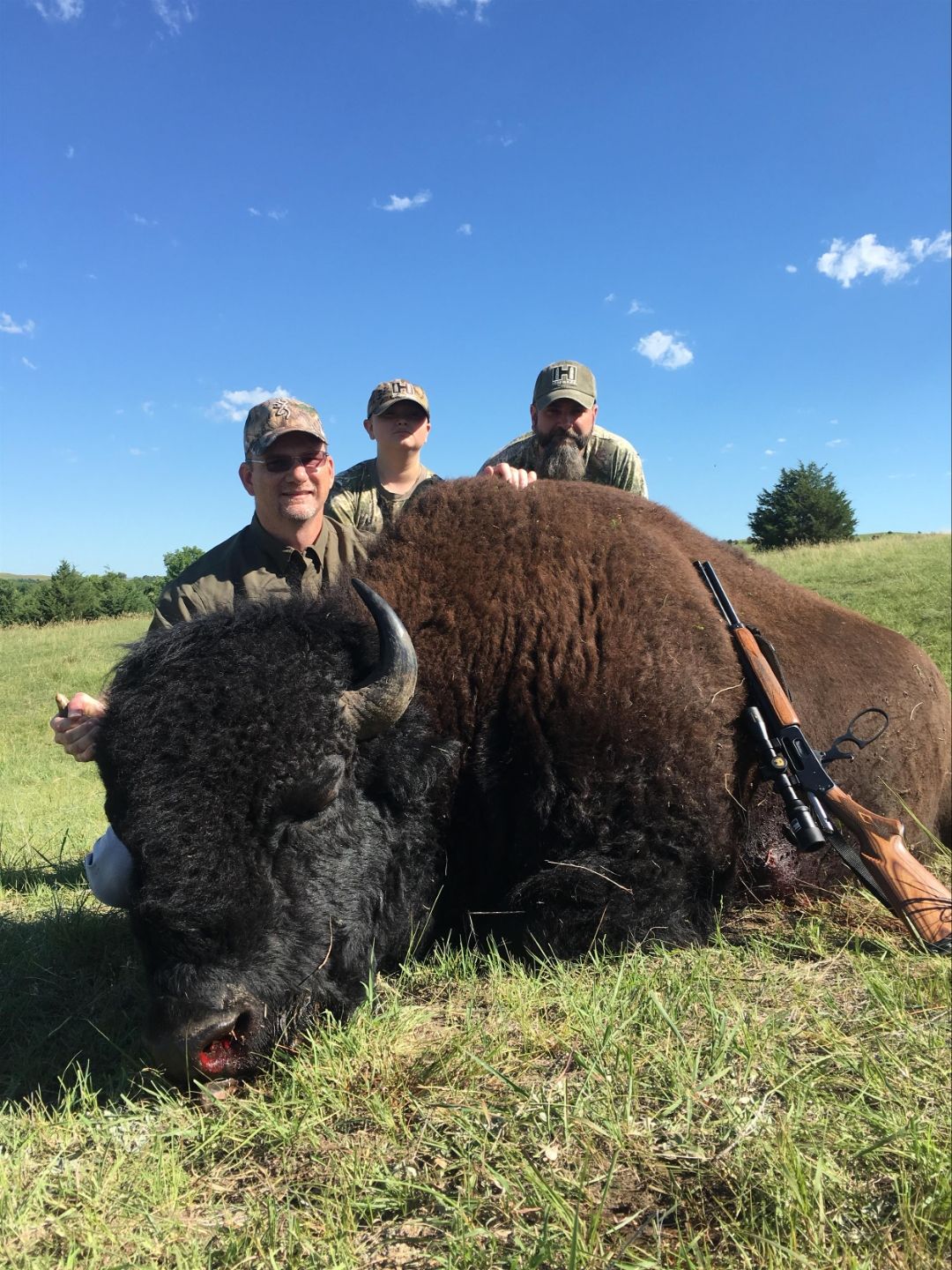
Combo Predator Hunts: Pairing Coyote Season with a Bison or Whitetail Trip
If you're already flying to Nebraska, booking a lodge, and taking time off work, running one species hunt is leaving meat on the table. The predator combo hunt Nebraska model — stacking coyote or bobcat hunting onto a bison or whitetail trip — makes a single trip more productive without adding another plane ticket. We structure these combinations regularly at ReWild Ranch, and they work well for hunters who want to maximize the week they've blocked off.
Here's how the pricing stacks, which seasonal windows allow the best combinations, and what a multi-species week actually looks like on the ground.
How Combo Hunts Work at ReWild Ranch
ReWild Ranch offers coyote, bobcat, and badger hunting year-round or in season, alongside bison hunts, elk hunts, whitetail deer hunts, and turkey hunts on our working ranch in Custer County, Nebraska. We're not a single-species operation that happens to have a coyote calling program — predator management is part of how we run this property, which means the guides who take you coyote hunting are the same people who know where the bison are moving and where the whitetail are staging at last light.
The practical structure is simple: your big game hunt occupies the primary daylight windows around legal shooting hours, and predator stands fill the gaps. Early morning before the bison hunt, late afternoon after you've glassed deer into a bedding area, or dawn and dusk on days when the weather has shifted and you're waiting for conditions to improve. Coyotes don't require the same preparation or weather window that deer or bison do. You can run an effective stand in 20 to 25 minutes, which fits between big game hunts without disrupting the primary objective.
Everything is guided. Your guide knows the property well enough to identify which draws are holding resident coyote pairs on any given day, where the wind favors a stand, and how to structure the predator hunting so it doesn't interfere with the big game work. For December and January bookings, bobcat is also on the table during legal season, which adds a third species to the week without a separate trip.
Pricing When You Stack Hunts
The cost math is one of the strongest arguments for combo hunts. Flying to Nebraska and back runs $300 to $700 depending on where you're coming from. Lodging at a quality hunting lodge runs $150 to $250 per night. Those fixed costs don't change based on how many species you're hunting. Adding predator hunting to an existing big game trip costs you the predator hunt package; it doesn't cost you another set of flights.
Predator hunt add-on with a bison hunt: - Bison hunt: $5,800 (includes lodging, meals, guide) - Predator hunt: $1,795 (all-inclusive, 2 days/3 nights) - Combined as a single trip: lodging and meals are already covered by the bison package, and predator stands run in the windows around the bison hunt. The effective cost of adding predator hunting to a bison week is negotiated directly — call Danielle at (308) 730-4116 to structure the overlap. When lodging and meals are shared across both hunts, you avoid paying for them twice.
Predator hunt alongside a whitetail hunt: - Whitetail packages are priced separately — contact us for current rates - Predator hunting in November means you're running coyote stands during the peak of the whitetail rut, which also happens to be the best period for coyote calling response (breeding season for coyotes starts in late January, but late October through November sees increased territorial movement and response to calls) - Adding dawn and dusk coyote stands between deer sits doesn't require separate travel or lodging
Predator hunt during elk season: - Elk hunt: $12,995 - Adding predator hunting to an elk trip makes particular sense because the elk season at ReWild Ranch runs during a period when coyotes are active and responding to calls - Same logic applies: one set of flights, one set of travel logistics, multiple species
The honest pitch for a combo hunt is this: a week-long trip to Nebraska with one species tag is a good hunt. A week with bison in the morning, coyote stands in the afternoon gaps, and a bobcat or two during the December window is an exceptional hunt that costs you the price of the predator package added to what you were already spending.
Best Seasonal Windows for Combo Hunting
Not every month is equally good for every combination. Here's how the calendar lays out at ReWild Ranch.
November: Whitetail rut + prime coyote fur + approaching bobcat season
November is the best single month on the calendar for a multi-species combo hunt. The whitetail rut runs mid-November in the Nebraska Sandhills. Bucks are moving during daylight, deer are visible from stands and from vehicle, and hunting hours are productive from first light through last light. In the breaks between deer activity — late morning, early afternoon — coyote calling is excellent. Coyotes are fully furred by November, producing the dense, prime-quality winter coats that carry commercial value. If you want to keep hides, November through January is the window.
The wind and cold that make November deer hunting productive also make coyote calling effective — coyotes move more in cold weather, respond more aggressively to calls, and the thermal contrast on cold nights makes our Nite Site equipment (included in the predator package) significantly more effective.
December: Bobcat season opens + winter coyote + bison
December 1 is the date that matters for serious predator hunters at ReWild Ranch: bobcat season opens. The bobcat season runs December 1 through February 28, and we have a consistent bobcat population on this property supported by the high turkey and rabbit numbers in our Sandhills habitat. Adding bobcat to a December bison hunt gives you a three-species week — bison during the primary hunting window, coyote and bobcat stands at dawn and dusk.
Coyotes in December are also approaching breeding season, which means territorial responses to howls and challenge calls are increasing. The period from mid-December through mid-January is when coyote pairs are most aggressive and most consistent in their response to a well-run stand.
January: Peak coyote breeding + peak bobcat season + bison
January is the best standalone month for a pure predator hunt, and it's excellent for a predator-bison combo too. Breeding season for coyotes runs January through March, when pairs are together and moving constantly, and territorial challenge howls are at their most effective. Bobcat is open and active. Fur is prime. If you can only do one predator trip per year, January is the month.
Bison are year-round at ReWild Ranch. We do not run a defined "bison season" — bison can be harvested throughout the year as part of our ranch management program. January bison hunting means cold weather, good visibility through the timber, and a memorable experience that pairs naturally with the predator hunting window.
Summer (June–August): Coyote management season
Summer combo hunts at ReWild Ranch look different from winter combos. Bison calves are on the ground, which makes the predator hunting more operationally relevant and also makes parts of the ranch off-limits for disrupting the herd. We run early-morning coyote stands — 5:00 am to 10:00 am — and pair the afternoons with ranch activities, fishing in the Sandhills lakes, or range time on the gong range. Summer isn't prime fur season, but it's excellent hunting for action volume, and the stands produce fast, aggressive responses from adult coyotes protecting pups. See /blog-posts/summer-coyote-hunting-nebraska for the full breakdown on summer hunting.
Sample Itinerary: A Week-Long Multi-Species Trip
This is how a typical November bison-plus-predator week looks at ReWild Ranch. Adjust the species mix based on your tags, but the structure holds for most combo hunts.
Day 1 (Arrival — Saturday afternoon) - Arrive at the ranch by mid-afternoon; meet your guide, get oriented, sight your rifles in on the gong range - Late afternoon: two coyote stands (5:00–6:30 pm) while light is good — this is typically your first opportunity to call coyotes - Dinner at the lodge; guide reviews the property and the plan for the next morning
Day 2 (Sunday) - 5:00 am: leave the lodge for first-light coyote stands; run three to four stands before 8:30 am - Breakfast back at the lodge - 9:30 am: glass bison on the property; your guide locates a herd and identifies a shootable animal - Afternoon: position for bison; if the harvest happens early, afternoon is free for two to three additional coyote stands - If bison is down: photos, field care, butchering back at the ranch
Day 3 (Monday) - If bison harvest carried into Day 3, morning session focuses on finalizing; otherwise, full predator day - Morning: four to five coyote stands; if December or later, mix in bobcat setups in cedar draws - Afternoon: rest, range time, or additional predator stands depending on weather and wind - Evening: two stands at dusk; bobcat setups if season is open
Days 4–5 (Tuesday–Wednesday) - Continue predator focus; run as many as 10 to 12 stands per day across the property - Whitetail hunters: shift to deer stands at prime morning and evening times; predator stands fill the midday window - Night hunting with the Nite Site thermal equipment after dinner (typically two-hour sessions starting at 9:00 pm)
Day 6 (Thursday) - Morning hunt - Head home after lunch, or extend the trip if you booked additional nights
Over a week like this, most hunters will work 25 to 35 coyote stands. Two or three coyotes per day is a realistic average for productive Sandhills ground. Some days are slower; some days you run a stand at 5:30 am and have two dogs down before 6:00 am.
Why the Cost-Effectiveness Argument Is Real
The numbers work in favor of combo hunts in ways that aren't immediately obvious. Consider the fixed costs of any hunting trip: flights, vehicle rental or fuel, time away from work or family. Those costs are identical whether you spend five days on one species or five days on three species.
A dedicated five-day predator hunt at ReWild Ranch costs $1,795. A dedicated two-day predator hunt costs $1,795 (our package minimum is two days/three nights). Adding predator hunting to an existing bison or whitetail trip means you've already paid for the flights, the lodge, and the meals — the incremental cost of the predator hunt is the package price, structured to avoid paying for lodging and food twice.
For hunters traveling from outside the central region — Texas, the South, the coasts — building a trip around a single Nebraska species means you're using most of your travel budget on logistics. The combo structure makes Nebraska competitive with destination states that have a single anchor species, because you leave with more memories, more animals, and a fuller use of the time you've invested.
Book Your Combo Hunt
Call Danielle at (308) 730-4116 to talk through how to structure a combo trip around your preferred species and dates. We'll be honest about which months work best for which combinations and what availability looks like.
For the full overview of what the predator hunt package includes, start at /blog-posts/guided-predator-hunting-nebraska.
For the ranch management context — why predator hunting on a working bison ranch matters — see /blog-posts/predator-hunting-ranch-management-nebraska.
For information on bobcat season specifically — dates, permits, what to expect — see /blog-posts/nebraska-bobcat-hunting-season.
Frequently Asked Questions
Can I add a predator hunt to a bison or whitetail package at ReWild Ranch?
Yes. Predator hunting at ReWild Ranch runs year-round for coyotes, and we build combo hunts around your primary species regularly. The structure is straightforward: your big game hunting occupies the primary dawn and dusk windows, and coyote stands fill the gaps in between — late morning, early afternoon, and during transitional weather windows. For December through February trips, bobcat is also available. Call Danielle at (308) 730-4116 to discuss how to structure the overlap and what the pricing looks like when lodging and meals are shared across multiple hunts.
What time of year allows the best combination of big game and predator hunting in Nebraska?
November is our top recommendation: whitetail rut, coyotes in prime fur with good response to calls, and temperatures cold enough to make the hunting comfortable and productive. December is a close second if bobcat is a priority — season opens December 1, and December bison hunting pairs naturally with bobcat and coyote stands at first and last light. January delivers the best pure predator hunting (peak breeding season, peak fur quality, peak coyote aggression) and also offers excellent bison hunting. Summer combos work for hunters focused on ranch management and action volume rather than prime fur.
How do you structure a week-long trip to include both a whitetail deer hunt and multiple coyote stands?
Deer hunting in November typically means sitting stands at first and last light — roughly 6:00 to 9:30 am and 3:30 to 6:00 pm. The three to four hours in the middle of the day are low-deer-movement time that maps perfectly to coyote calling. We run three to four predator stands during the midday window, then get you back on the deer stand for the afternoon sit. Night hunting with our thermal equipment adds another two-hour window after dinner. Over a five-day hunt structured this way, most hunters run 15 to 20 coyote stands while also hunting whitetail every morning and evening. It's a full week, not a leisurely one — but most hunters leave with both a deer story and a coyote story worth telling.
check out other posts
Nebraska Sandhills Lodge: Where to Stay When You're Not Hunting
Buffalo Hunts: What a Real Guided Hunt Looks Like in 2026
