BLOG
Electronic Call Strategy for Coyotes: How to Work the Sandhills Prairie
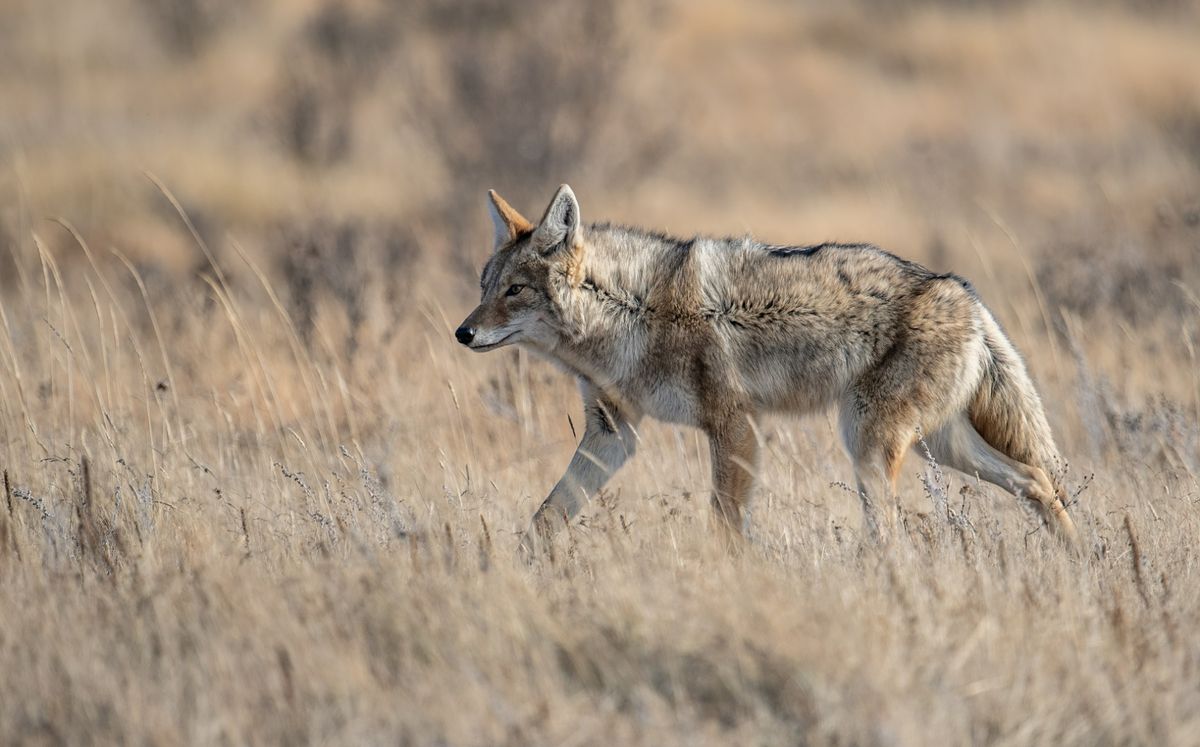
Electronic Call Strategy for Coyotes: How to Work the Sandhills Prairie
Electronic call coyote hunting strategy in open prairie country is different from what most hunters learned in timber or field-edge terrain. When you can see 600 yards in every direction and the coyotes can see the same distance back at you, the basics still apply — wind, concealment, sound selection — but the execution has to be tighter.
We run e-callers on every predator hunt here at ReWild Ranch in Sargent, Nebraska. Our working bison ranch sits in Custer County in the heart of the Sandhills — miles of rolling grass hills, marsh-filled draws, open meadows, and very few trees. We've dialed in what works in this terrain through years of guiding, and a lot of what works runs counter to tactics hunters developed in the eastern states.
This guide covers the electronic callers we use, how we position them, the sound sequences that produce the most consistent responses in open prairie, and how to read a stand and adjust when coyotes don't commit the way you expect.
For regulations on e-caller use in Nebraska — electronic callers are fully legal for coyote hunting here — see our Nebraska coyote hunting regulations guide.
The Best Electronic Callers for Prairie Coyote Hunting
In open rolling terrain, speaker quality and projection distance matter more than sound library size. A caller with 2,000 sounds is worthless if the speaker can't push sound across a 400-yard meadow on a 15 mph southwest wind. Two units we use and trust:
FoxPro X360
The FoxPro X360 is our primary caller at the ranch. The 7-speaker system — three XHD+ speakers, three tweeters, one full-range — pushes sound in all directions at genuine prairie volume. The 360-degree rotating sound feature is useful on stands where you're not sure which direction a coyote will approach from; it keeps the audio compelling from multiple angles rather than projecting all the volume in one direction.
The TX2000 remote includes a stand timer, barometric pressure, and temperature readout — which sounds like features nobody needs until you're sitting on a cold hillside at 11 p.m. and want to know how long you've been running this sequence. The remote also gives you two built-in decoy outputs with five speed settings.
At roughly 10 pounds, the X360 isn't a pack-light unit. In the Sandhills, where we typically drive ATVs to stand locations and place the caller by hand before settling in, the weight isn't a problem.
ICOtec Outlaw+
The ICOtec Outlaw+ is our backup unit and what we recommend for hunters who want a single caller that handles everything. Bluetooth connectivity to 100 yards, remote range out to 300 yards, 2,000-sound storage, and the AD400 adjustable-speed decoy all in a durable, field-proven package.
The interface is more intuitive than the FoxPro for hunters who aren't calling multiple times per week. You can cycle through sounds quickly, set sequences, and adjust volume on the fly without fumbling with the remote in cold-weather gloves.
For hunters on a budget looking for a first serious caller, the Primos Double Take is a solid entry point: 24-bit sound, 100 sounds curated by Randy Anderson, and a 120-yard backlit remote at a fraction of the cost of the FoxPro or ICOtec units.
Caller Placement: The 30–50 Yard Rule in Open Prairie
The core placement principle for e-callers doesn't change regardless of terrain: put the speaker 30–50 yards in front of and away from your shooting position. When a coyote comes to investigate the sound, its eyes and attention are focused on the caller — not on you. That separation is what gives you the shot opportunity.
In open prairie, the placement logic has a few specific variations:
With a headwind (wind in your face): Place the caller straight out 30–50 yards. Coyotes will approach from downwind — from behind or to your sides — but they'll be focused on the caller location as they come in.
With a crosswind: Place the caller 15–30 yards upwind of your position and slightly out in front. Coyotes will circle downwind to verify the smell before committing. That downwind arc puts them walking past or in front of you — the best shot angle available.
On the hillsides: We position the caller down in the bowl or draw below our elevated shooting position. Sound travels down the draw and out across the meadow. Coyotes moving through the low ground between hills hear it clearly. When they approach, they're looking up toward the sound — at the caller, not at us sitting on the slope above.
Speaker direction: Always point the speaker away from your shooting position. Coyotes approaching the caller arrive facing away from you, focused on the sound source, not scanning for a human outline on the hill behind.
The one rule that matters more than any other in Sandhills terrain: you must be able to see the downwind side of your caller. Coyotes in this country circle downwind in the final 100–200 yards before committing — or they come in downwind of the caller from a perpendicular angle and scent-check before they ever show themselves. If you can't watch that downwind flank, you'll get winded before you see the dog.
Sound Categories and When to Use Each
Champion contest caller Geoff Nemnich's system divides coyote calling sounds into four trigger categories. Each one works on a different psychological lever, and switching between categories — rather than between similar sounds within the same category — is what produces responses from coyotes that have already ignored one type of call.
Prey distress: Cottontail rabbit, jackrabbit, fawn bleat, bird distress, rodent squeak. The default trigger — hunger and opportunistic feeding. Works year-round. Cottontail is the universal starting sound; jackrabbit is louder and carries further in wind. In the Sandhills on a breezy day, jackrabbit distress reaches coyotes that wouldn't hear a rabbit call across the same terrain.
Coyote vocals: Invitation howl, location/interrogation howl, challenge howl, whimpers, group yip-howl. These trigger curiosity and territorial instinct. Most effective during breeding season (January–March) and in spring when adults are defending territory near dens. The interrogation/location howl is the safest coyote vocal year-round — it asks "who's there?" without issuing a challenge that naive fall coyotes might balk at.
Coyote distress: Pup distress, coyote-raccoon fight, coyote-in-fight, breeding sounds. Parental instinct and territorial protection drive the response. Pup distress is the deadliest summer sound, June through September — adults respond in rescue mode, fast and direct. The coyote-raccoon fight is an aggressive territorial trigger that works year-round when softer sounds haven't produced. We use it as a closer late in stands.
Curiosity sounds: Crow cawing, magpies on a kill, woodpecker activity. Year-round triggers that draw coyotes and bobcats through curiosity rather than hunger. These are effective when a stand has already run prey distress and coyote vocals — they switch the trigger mechanism entirely. Also the top sounds for drawing bobcats to a stand during the December–February season.
The practical rule: if a sound from one category isn't producing, switch categories. Switching from cottontail distress to jackrabbit distress is not a category switch — it's the same trigger. Switch to coyote vocals or pup distress instead.
The Nemnich Championship Sequence, Adapted for Sandhills Prairie
Here is the stand sequence we build our guided stands around, adapted from Geoff Nemnich's championship calling system for open rolling terrain:
Setup (0 min): Approach silently. Place the caller at your chosen position in the bowl or meadow below. Set up your shooting position — ideally with your back toward the ridge, seated or prone, facing the primary approach. Check wind. Range the likely approach corridors with binoculars or rangefinder before calling. Wait 2–3 minutes for the terrain to settle after your approach.
Phase 1 (1–4 min): Start with subtle cottontail distress at low volume. In the Sandhills with even a light wind, you can't stay at low volume for long — gradually increase to your situational maximum within the first minute. On calm days, build slowly. With 10–15 mph of wind — the ideal calling range — run near-max volume from the start. Run 10–15 second bursts with 30-second pauses on calm days; on windy days, extend bursts to 30 seconds with 10–15 second pauses.
Phase 2 (4–7 min): Switch to bird distress (curiosity trigger) — crow distress, woodpecker, or similar. This pivots the approach from hunger to curiosity and targets coyotes that didn't react to prey distress. Young Blue Jay Distress and woodpecker sounds are reliable. This category switch is important: don't run another rabbit sound.
Phase 3 (7–11 min): Move to coyote pup distress or pup howls (parental/social trigger). This pulls the stand in a third direction — now you're triggering protective instinct rather than hunger or curiosity. Pup distress is effective June through September for the parental response and year-round for territorial adult coyotes.
Phase 4 (11–15 min): If nothing has committed, escalate to something aggressive: coyote-raccoon fight or coyote-in-fight sounds (territorial trigger). This is your closer. It's loud, confrontational, and difficult for a territorial coyote to ignore. A dog that's been circling the stand for 10 minutes without committing often breaks cover for this sound.
Wrap (15 min): Scan 360 degrees. Sit silent for 1–2 minutes. If nothing has shown, pick up and move at least a half mile — farther if terrain allows — and run the sequence again.
Volume in wind: Carry a wind checker. On calm days (0–5 mph), low-to-medium volume with deliberate pauses. Ideal calling wind is 10–15 mph — enough to cover your minor movement noises but not enough to swallow the sound before it reaches the draws. Above 20 mph, switch to a crosswind setup. Calling directly into a 25-mph headwind means your sound isn't reaching the coyotes at distance that Sandhills stands require.
Stand Duration: The 2–8 Minute Sweet Spot and When to Stay Longer
The data on stand duration is consistent across sources: most coyote kills happen in the first 2–8 minutes of calling. A coyote that was close and receptive comes in fast. Beyond 8 minutes, you're working animals that were either far away, cautious, or moving toward you slowly.
Maximum productive stand time in open daylight terrain is around 15–20 minutes. If nothing has appeared on a clear day where you can see 500 yards in every direction, the stands you could reach from this position have already declared. Move.
Night stands run longer — 20–30 minutes minimum — because coyotes can't see as far in the dark, move more cautiously without visual confirmation, and need more time to locate and travel to the sound. The Sandhills at midnight in January is a different stand than noon on the same property.
A coyote trotting toward your call covers ground at roughly 10 mph — a mile in 6 minutes. If you think a coyote is 600 yards out and responding, stay put. But once you've hit the 15-minute mark in open terrain with no sign, pick up and move. Bumping stands every 15–20 minutes and covering 1/2 to 1 mile between them is how you maximize coyotes taken in a full day of Sandhills hunting.
When to Switch from Distress Calls to Howls
The rule of thumb: start with prey distress, use howls strategically based on the season and situation.
January through March (breeding season): Howls are at their peak effectiveness. Challenge howls and estrus whines draw aggressive responses from paired-up coyotes defending territory. This is the one time of year where opening a stand with a locator howl — before any distress sound — can produce immediate, fast responses from nearby pairs.
April through June (denning season): Territorial howls trigger protective responses from adults near dens. Invitation and interrogation howls are the safest choice — they announce your presence without the confrontational edge of a challenge howl. Pup distress, once pups are born in April, becomes the most powerful single sound in the library.
July through September (pup season): Avoid dominant challenge howls with fall coyotes — young, inexperienced animals hear a challenge and often balk rather than engage. Use interrogation howls to locate, then switch to pup distress if an animal responds.
October through December: Prey distress is primary. Coyotes are responding to hunger, not social triggers. Challenge howls on naive fall coyotes produce mixed results. Keep an interrogation howl available to locate distant animals before committing to distress sequences.
The sequence switch rule: if prey distress hasn't produced in 4–6 minutes, don't run more prey distress. Switch to a howl — specifically an interrogation/location howl — to ask if anyone's listening before going to the parental or territorial triggers in the latter half of the sequence.
Sandhills-Specific Notes: What the Terrain Teaches You
A few things we've learned calling coyotes specifically in this terrain:
Coyotes answer from a mile out. In the Sandhills, sound carries farther than most hunters expect, and coyotes that hear your call may howl back from 800 yards or a full mile away. When you hear that distant response, don't move. Don't adjust your caller. Stay still and let the sequence play. That coyote is working — it just has ground to cover.
Use the draws as your approach corridors. Before calling, identify the draws, marsh edges, and saddles between hills where coyotes travel. That's where you position the caller — at the mouth of a draw or at the edge of a marsh — not out in the middle of an open hillside.
Coyotes that crest a ridgeline and disappear aren't gone. They've dropped into the draw and are still working toward your caller from the bottom. Give them time. The instinct to pack up when a coyote drops out of sight costs hunters animals every day.
Hang up distance in the Sandhills is 400–600 yards. Educated coyotes stand on a far ridge and stare. At that distance, escalate your sequence to the aggressive territorial sounds. If that doesn't produce a commit, silence the caller entirely for 60 seconds, then run a single short burst of pup distress. Sometimes the silence is what breaks the stalemate.
For more on night calling strategy and how thermal equipment changes the game after dark, see our guide: Thermal and Night Vision Coyote Hunting in the Nebraska Sandhills. For how we integrate e-calling into our bobcat stands during the December–February season, see: Nebraska Bobcat Hunting: Season Dates, Permit Requirements, and What to Expect.
Book Your Hunt
Our predator hunts run 2 days and 3 nights, all-inclusive at $1,795 per hunter. Lodging, home-cooked meals, guide, e-callers, and thermal equipment are included. Coyote is available year-round; bobcat runs December through February; badger November through February. No trophy fees on any predator species.
Call Danielle at (308) 730-4116 to check dates and availability. For a full overview of what a guided predator hunt at ReWild Ranch looks like, see our hub: Guided Predator Hunting Nebraska.
ReWild Ranch is located at 81785 Road 457, Sargent, Nebraska 68874 — Custer County, in the heart of the Sandhills.
Frequently Asked Questions
What distress sounds produce the most consistent coyote responses in open prairie terrain?
Cottontail rabbit distress is the universal starting sound — it works year-round and draws every predator species. In open, windy prairie like the Sandhills, jackrabbit distress is more effective because the louder call carries farther across terrain. For mid-stand switching, pup distress (June–September) and the coyote-raccoon fight sound (year-round) are the most consistent second and third sounds when prey distress hasn't produced a commit. Bird distress is underused in open country and reliably triggers curious coyotes that didn't respond to the initial rabbit sound.
How far should you position your e-caller from your shooting position in flat Sandhills country?
30–50 yards is the standard rule, and it holds in Sandhills terrain as well as anywhere. The key in open rolling country is to position the caller lower than your shooting position — run it down in the bowl or at the edge of the draw below you, not flat with you on the hilltop. This keeps incoming coyotes looking down the slope toward the sound rather than scanning across the ridge where you're sitting. In a crosswind, place the caller slightly upwind of your position so coyotes circling downwind pass in front of you.
When should you switch from distress calls to howls during a coyote stand?
Switch to howls based on season, not timing within the stand. During breeding season (January–March), open with a locator howl before running any distress — it's the most effective single call of the year. Outside of breeding season, run prey distress for the first 4–6 minutes; if there's no response, use an interrogation/location howl to check whether a coyote is listening at distance before escalating. Avoid challenge howls with fall coyotes (August–November) — young animals that hear a dominant challenge often balk rather than engage. Use interrogation howls year-round to locate, then follow with distress or pup sounds.
check out other posts
Nebraska Sandhills Lodge: Where to Stay When You're Not Hunting
Buffalo Hunts: What a Real Guided Hunt Looks Like in 2026
