BLOG
Best Rifles and Cartridges for Coyote and Bobcat Hunting in Nebraska
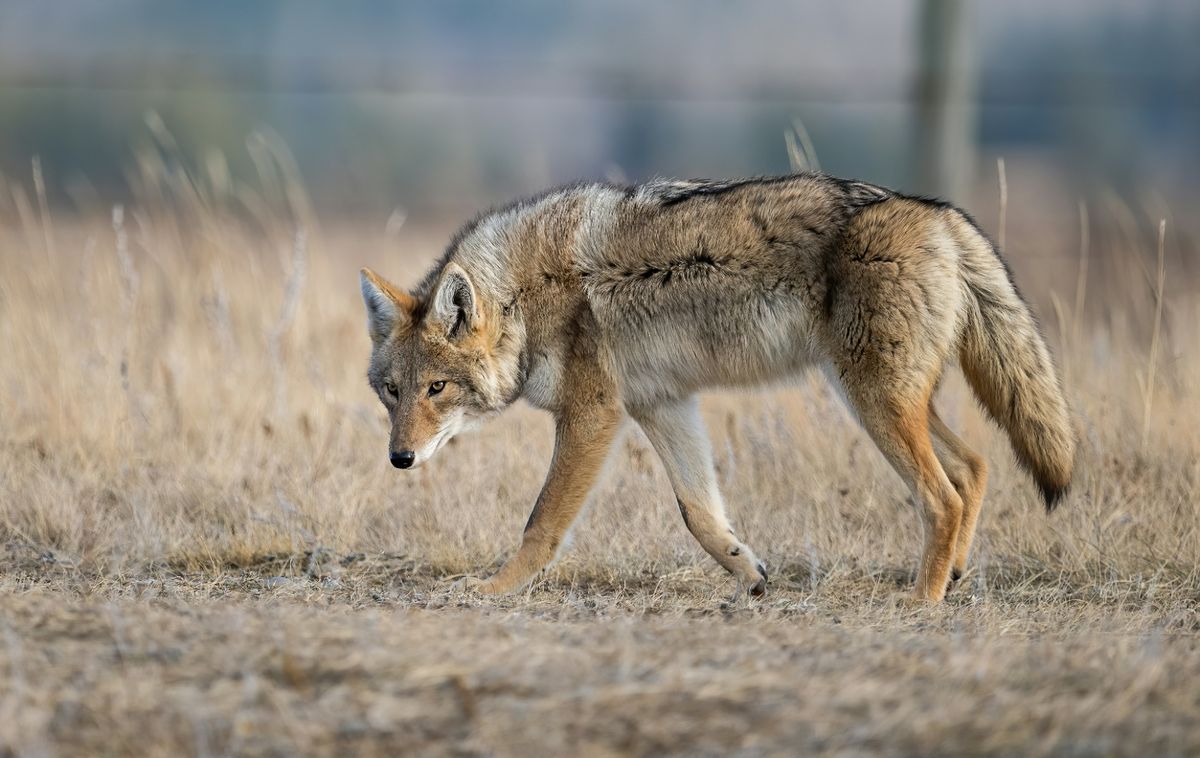
Best Rifles and Cartridges for Coyote and Bobcat Hunting in Nebraska
When a coyote commits to a call and comes in across 300 yards of open Sandhills meadow, the conversation about "what's the best rifle for coyote hunting Nebraska" gets real fast. You need a cartridge that's flat-shooting enough for those distances, accurate enough for a standing coyote at 75 yards, and — if you want to keep the hide — gentle enough on the pelt that you don't ruin it on the shot.
We've run a lot of calibers on this property. What follows is a straightforward breakdown of what works, what doesn't, and what we'd buy if we were starting from scratch today.
Caliber Breakdown: .204 Ruger, .223 Rem, .22-250, and .243 Win
Every caliber discussion for coyotes comes down to three variables: effective range, fur damage, and how well it handles Nebraska wind. The Sandhills adds a fourth: you'll regularly face shots at 200 to 400 yards across open ground with a 15 mph crosswind. That changes the calculus compared to hunting timber in the Midwest.
The .204 Ruger is the fur-saver's choice. It drives a 32-grain bullet at roughly 4,225 feet per second — the flattest trajectory of any common coyote cartridge — and the small-diameter, fast bullet creates minimal entrance wounds and almost no exit wound on a broadside chest shot. If keeping hides is your primary goal, the .204 is hard to beat. Its weakness is wind drift: a 32-grain bullet at .20 caliber moves more in a crosswind than heavier bullets in the same velocity class. On calm days in the Sandhills, it's excellent. On a 20 mph crosswind, you're holding over significantly at 300 yards. Ammo availability is also thinner than the other options here — you won't find .204 Ruger at a rural Nebraska gas station.
The .223 Remington is the volume choice. Ammo is everywhere, rifles are everywhere, and the round is effective on coyotes inside 300 yards with the right bullet. A 55-grain V-MAX or Varmageddon load out of a .223 will shoot well under an inch at 100 yards in most quality bolt guns, and it won't blow a massive hole in a pelt if you're using a frangible varmint bullet rather than a soft-point hunting bullet. The .223 starts to show its limitations past 300 yards in wind — it's a 12-inch drift cartridge at 300 yards in a 10 mph crosswind, which is meaningful when the target is a coyote's vitals. For most Sandhills calling setups where shots are inside 250 yards, the .223 is completely adequate.
The .22-250 Remington is our working recommendation for the Sandhills specifically. It pushes a 55-grain bullet at 3,675 feet per second — significantly faster than the .223 with the same projectile weight — which translates to a flatter trajectory and better wind resistance. At 400 yards, a .22-250 with a 55-grain bullet drops about 14 inches from a 200-yard zero; the .223 drops closer to 22 inches. That matters when you're ranging a coyote at 375 yards on a featureless grass plain. Fur damage with the right bullet is minimal — we'll cover bullet selection in the next section. The .22-250 does have more recoil than the .223 or .204 (about 6.7 foot-pounds versus 3.8 for the .204), but it's still a light-recoiling rifle by any objective measure.
The .243 Winchester is the versatile option for hunters who want one rifle that can do coyotes and deer. A 58-grain varmint load in .243 shoots to 700 yards with a competent shooter and a quality scope, and recoil is still mild enough for all-day shooting. If you're coming to Nebraska for a whitetail hunt and want to run coyote stands between deer hunts, the .243 lets you do both without changing guns. The tradeoff is that heavier .243 hunting loads destroy pelts — stick to varmint loads under 70 grains if you want to keep hides. See our combo hunt guide at /blog-posts/combo-predator-hunt-nebraska for more on pairing predator and deer hunts.
Bullet Construction for Pelt Preservation
The caliber matters less than the bullet. We've seen a .22-250 leave a fist-sized exit wound with the wrong load, and we've recovered coyotes with a .243 where you could barely find the entrance hole with a properly constructed varmint bullet.
The rule of thumb: frangible varmint bullets that fragment internally cause minimal external damage. Poly-tipped bullets like the Hornady V-MAX and Nosler Varmageddon are designed to expand violently at varmint-class velocities — they dump energy inside the animal and typically produce a small entrance hole with little or no exit. These are the most fur-friendly bullets for anyone shooting centerfire rifles at moderate ranges.
Barnes TSX solid copper bullets are worth mentioning specifically. The 40-grain TSX in .22-250 is one of the cleanest pelt-preserving options on the market — the solid copper construction causes the bullet to mushroom and stay in the animal rather than fragmenting through the hide on the far side. It's a reliable one-hole entry at ranges from 30 to 300 yards.
Sierra MatchKing hollow points (52 to 53 grains in .22 caliber) are the handloader's choice. The thin jacket peels back on entry in a controlled manner, causing rapid energy transfer without massive exit damage. If you load your own ammunition, a 52-grain SMK in .22-250 or .223 at or near maximum velocity is one of the better fur-friendly options.
What to avoid if you're keeping hides: standard hunting soft-point bullets (Remington Core-Lokt, Winchester Power-Point, etc.) are designed to expand aggressively at big-game impact velocities, and at the high velocities of .22-250, they can blow large exit wounds. Nosler Ballistic Tips and similar polymer-tipped hunting bullets behave similarly. Save those for deer and use dedicated varmint bullets on coyotes you want to skin.
Specific load recommendations for pelt-friendly shooting: - .204 Ruger: 32-grain Nosler Varmageddon — the gold standard for minimal exit damage - .223 Rem: 45 to 55-grain Hornady Varmageddon or V-MAX — effective to 275 yards with minimal pelt damage - .22-250: 40-grain Barnes TSX or 55-grain Winchester Varmint X — both produce clean kills with minimal hide damage - .243 Win: 58-grain Winchester Varmint X — keep velocity up and stay inside 400 yards
Recommended Rifles with Price Points
We've shot a lot of rifles on this property. Here are three that represent the best value at different price points, specifically for Nebraska predator hunting conditions.
Savage 110 Predator — $700 to $900
This is what we'd buy for a dedicated predator rifle if we were starting fresh. The AccuTrigger is adjustable from 1.5 to 4 pounds out of the box with no gunsmithing — most hunters set it around 2.5 pounds for field use, which is clean and crisp without being dangerous. The AccuStock provides a bedding system that keeps the rifle accurate regardless of temperature changes. Available in .204 Ruger, .223 Rem, .22-250, and .243 Win — every cartridge on this list. The Mossy Oak Terra camo option blends well in Sandhills grass and cedar draws. Fluted barrel is threaded for a suppressor if you want to go that route eventually. This rifle will shoot half-inch groups at 100 yards with quality ammo, which is all you need for any coyote in Nebraska.
Ruger American Gen 2 Predator — $550 to $700
If you're outfitting your first predator rifle and don't want to spend $900, the Ruger American Gen 2 Predator punches well above its price. The Gen 2 corrected the feeding issues that frustrated some Gen 1 owners. Threaded 20-inch barrel, Cerakote finish for weather resistance, available in .204 Ruger, .22-250, and .223 Rem. It's a sub-MOA rifle that costs less than most budget optics. Nothing fancy, nothing fragile, works every time.
Tikka T3x Lite — $850 to $1,000
The Tikka is for hunters who walk a lot of stands. At 6.5 pounds unscoped, it's the lightest option on this list by a meaningful margin — after carrying a rifle for five or six stands in July heat, that weight difference is real. The Tikka action is famously smooth, the factory trigger is excellent, and accuracy is on par with rifles costing twice as much. Available in .223 Rem and .22-250. The tradeoff is that it's not a camo pattern rifle — it comes in a gray synthetic stock — so you'll need to stay disciplined about movement on stands.
Scope Magnification Guide for Nebraska's Mixed Terrain
The Sandhills is a mixed environment: you'll have wide-open meadow shots at 350 yards, but you'll also be setting up in draws and cedar-edge situations where coyotes can appear at 50 yards from the side. A scope that's optimized only for long range is a handicap when a dog comes in close and fast.
Our recommendation for this terrain is a 4-16x or 4.5-18x variable, run at about 8 to 10x as a default. Here's why that range works:
At 4x or 4.5x, you can acquire a fast-moving coyote at 60 yards without hunting for it in the scope. At 16x or 18x, you have enough magnification to read wind at 400 yards and place a precise shot on a stationary coyote across a big meadow. Most of our stand-to-stand shots happen between 100 and 300 yards, and at those distances, 8 to 12x is more than enough to shoot confidently.
A 3-12x is also a practical choice if you want a lighter, simpler optic. You give up some magnification at distance, but in Sandhills wind conditions, a coyote at 400 yards is a challenging shot regardless of scope power — wind drift at that distance in a Nebraska crosswind is the limiting factor, not magnification.
Specific optics that work well on these rifles: - Vortex Viper HD 3-15x44 — our top all-around recommendation; illuminated reticle, locking turrets, excellent glass for the price (around $700) - Leupold Mark 4HD 4.5-18x — proven on the Savage 110 Predator platform specifically; exceptional clarity at distance - NightForce NXS 5.5-22x56 — for hunters who want to reach past 400 yards reliably in wind; more scope than most Sandhills shots require, but bulletproof construction
For night hunting with thermal equipment — which we provide at ReWild Ranch as part of the $1,795 package — the thermal scope's own magnification system applies. See /blog-posts/thermal-night-vision-coyote-hunting-nebraska for a full breakdown of our thermal setup and how night optics differ from daytime glass.
What ReWild Ranch Provides vs. What to Bring
What we provide: - Thermal and night vision equipment (Nite Site) for night hunting - Electronic caller (FoxPro) - Guide with working knowledge of the property - Lodging and home-cooked meals - Transportation between stands across the property
What you should bring: - Your rifle in your preferred caliber — there is no ranch rifle available - Your own ammunition — we strongly recommend bringing at least 100 rounds; quality varmint ammo can be hard to find in Sargent, Nebraska at the last minute - Your own day optics (binoculars, rangefinder) - Nebraska Hunt permit if you're a non-resident ($109 annual or $76 for a 2-day permit, available through the Nebraska Game and Parks Commission at outdoornebraska.gov)
A note on suppressors: they're legal on coyotes in Nebraska and genuinely useful for multi-coyote stands. If you have one and a host state permit, bring it. Running a .22-250 suppressed at moderate volume makes consecutive stands far more productive.
Book Your Hunt
Questions about what to bring, or want to talk through the right setup for your first Sandhills predator hunt? Call Danielle at (308) 730-4116.
For the full picture of what a guided predator hunt at ReWild Ranch looks like, see the pillar article at /blog-posts/guided-predator-hunting-nebraska. If you're thinking about adding a predator hunt to a bison or whitetail trip, the breakdown is at /blog-posts/combo-predator-hunt-nebraska.
And if you want to understand the electronic calling side — what sounds to run and when — our calling strategy guide is at /blog-posts/electronic-call-coyote-hunting-strategy.
Frequently Asked Questions
What cartridges minimize pelt damage for hunters who want to keep the coyote hide?
The .204 Ruger with a 32-grain Nosler Varmageddon is the gold standard for pelt preservation — tiny entrance, no exit, devastating energy transfer inside the animal. For hunters who want more wind-fighting ability, the .22-250 with a 40-grain Barnes TSX or 55-grain Winchester Varmint X is an excellent pelt-friendly option to 300 yards. The key is bullet construction: use frangible varmint bullets, not hunting soft-points or polymer-tipped bullets designed for deer-class expansion.
Is a .223 Remington sufficient for open-country Sandhills coyote shots, or is a larger caliber better?
For inside 250 yards, the .223 is adequate. It's accurate, cheap to feed, and available everywhere. Where it starts to show limitations in the Sandhills is wind resistance at 300 to 400 yards — at those distances, a .22-250 or .243 holds its trajectory better in a Nebraska crosswind. If most of your shots will be within 200 yards on a calling stand, the .223 is fine. If you want to reach across a 400-yard meadow with confidence in the wind, step up to the .22-250.
What scope magnification range is best for calling coyotes in Nebraska's mixed open and draw terrain?
A 4-16x or 4.5-18x variable covers the full range of Sandhills shooting conditions. Run it at 8-10x as your default — enough magnification for confident shots at 300 yards, low enough to track a fast incoming dog at 60 yards. The ability to drop down to 4x matters more than you'd think when a coyote comes in from a draw at short range and you have maybe 10 seconds to get on it. A 3-12x works too and keeps weight down; the top end you actually lose is rarely needed in wind conditions that make 400-yard shots practical anyway.
check out other posts
Nebraska Sandhills Lodge: Where to Stay When You're Not Hunting
Buffalo Hunts: What a Real Guided Hunt Looks Like in 2026
